


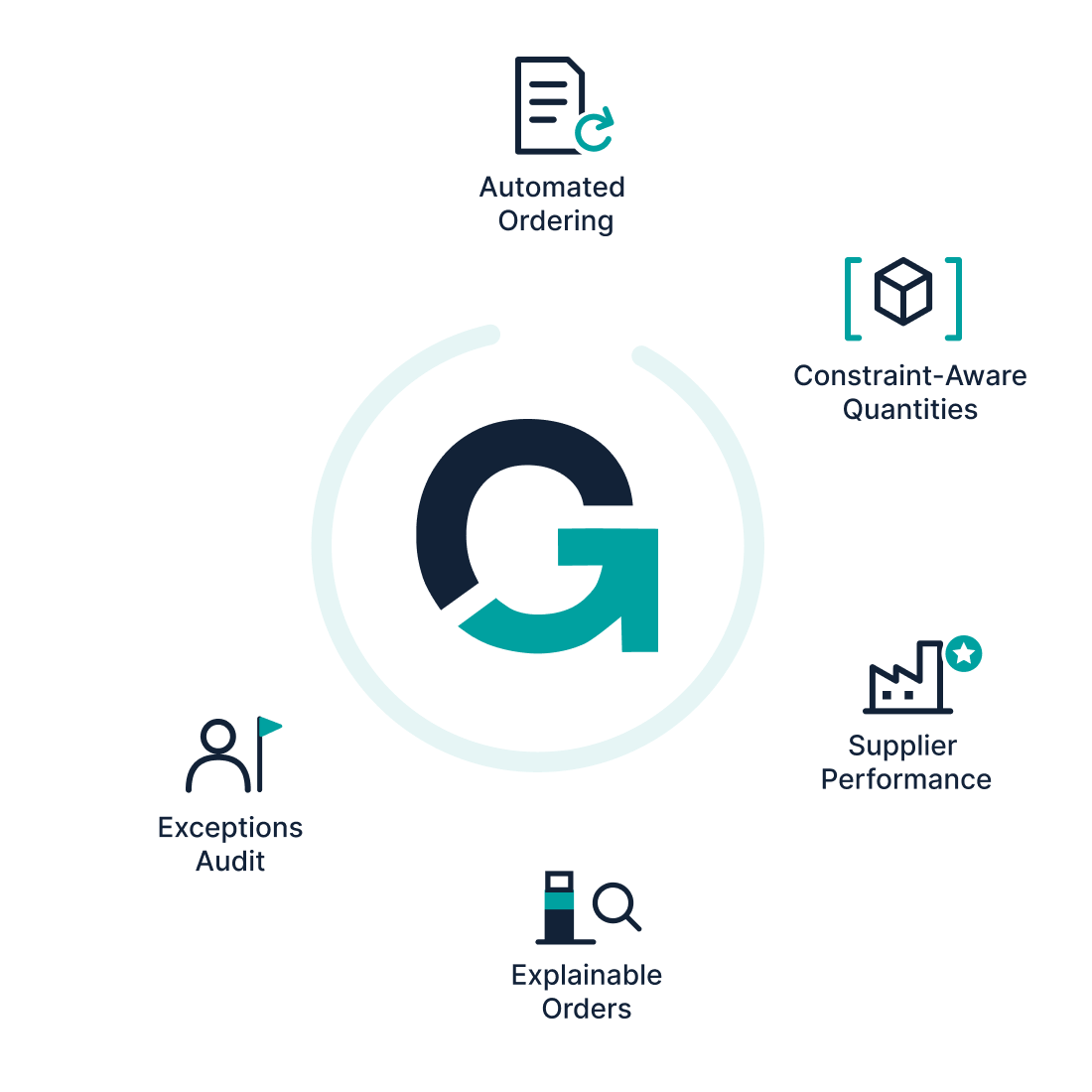

Target-Based Ordering
Orders are sized to keep stock inside the agreed target range for every product and every location.
Replenishment
Keep shelves full and stockrooms lean with daily orders sized to what each store will sell before the next delivery arrives.
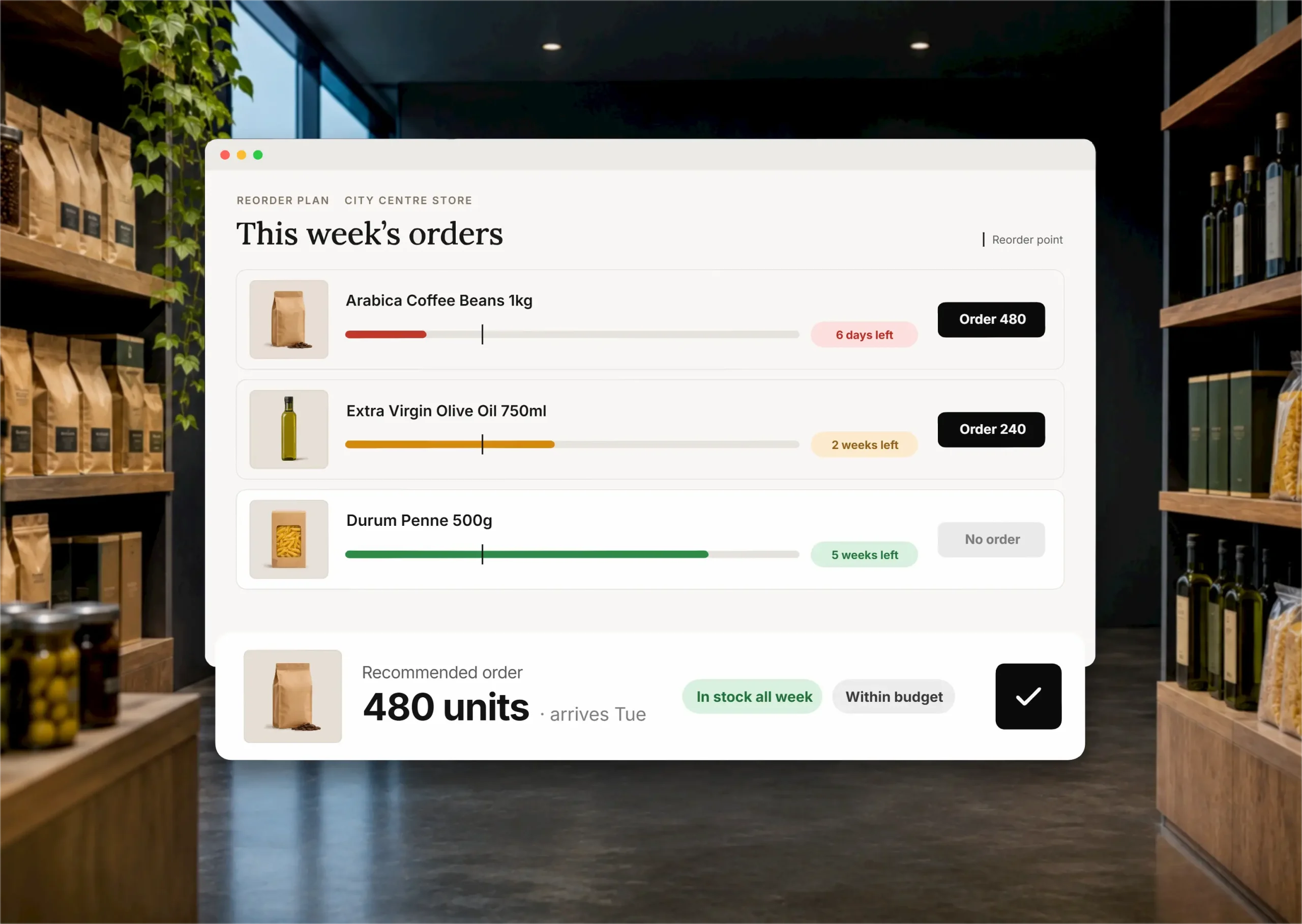
Restocking usually runs on rules set long ago: when stock drops to a fixed level, order a fixed amount. Those rules don’t know a promotion is coming, a season is turning, or a supplier is running late. So you carry extra stock “just in case” on items that don’t need it, and still run out of the ones that do. Buyers spend their days checking spreadsheets and chasing orders. Each gap shows up in two places at once: empty shelves and cash tied up in the wrong stock.
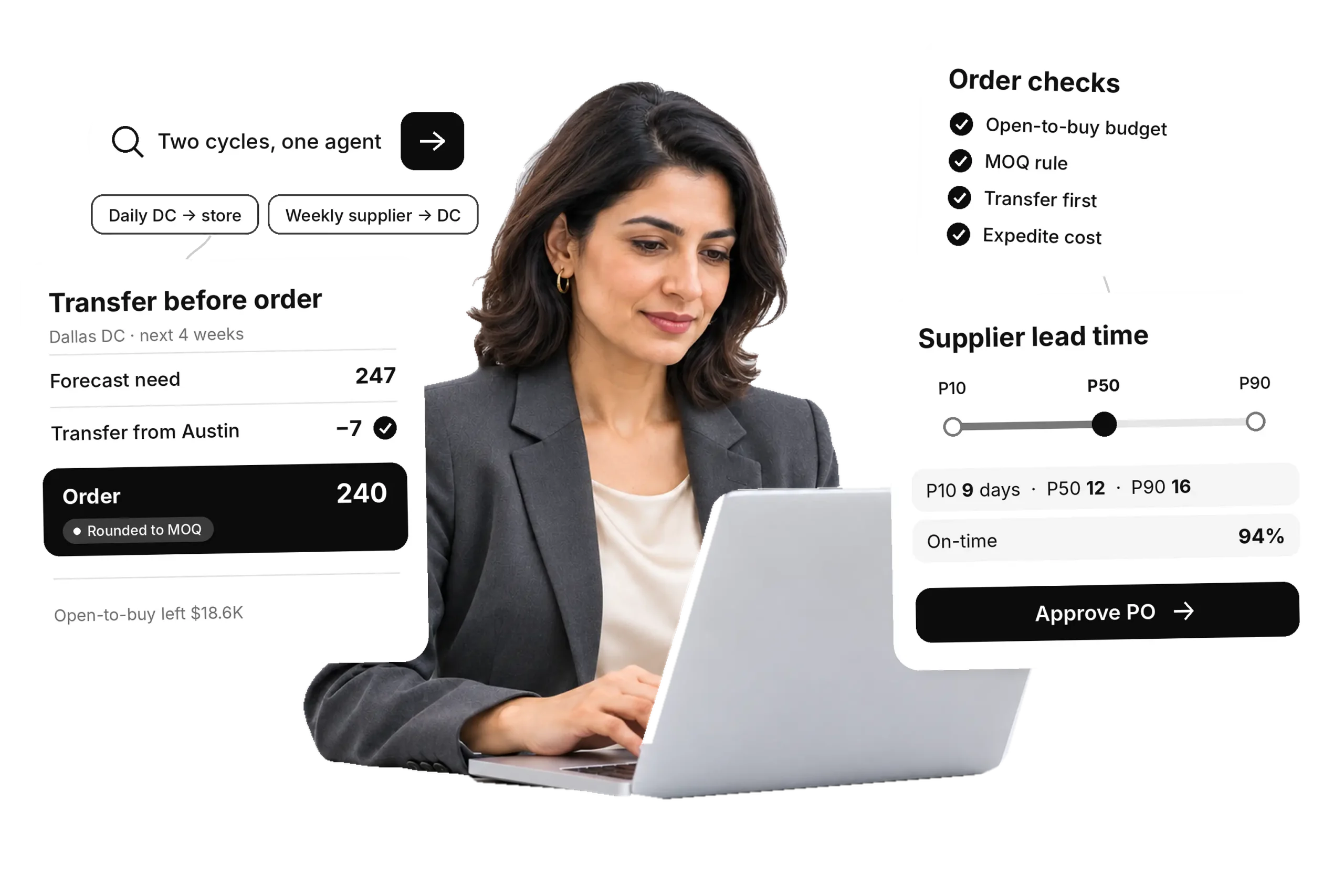
Replenishment, part of Growdhi’s Supply IQ, decides what to order and how much: daily from warehouse to store, weekly from supplier to warehouse. Each order is sized to keep stock within the range set by Inventory Optimization, using the demand forecast and each supplier’s real delivery record. Before ordering, it checks whether another store can cover the gap, whether the product is being cleared, and whether the budget allows it. Each order shows what shaped its size, such as demand, supplier minimums, or warehouse space.
Most orders are routine, and they shouldn’t take up a buyer’s day. Replenishment handles those and brings the unusual ones to your attention.
Set minimum and maximum stock levels, order cut-off times, pack sizes, and supplier minimums. Orders that fall outside normal patterns, such as a sudden spike or a late supplier, are flagged for review before anything is sent.
Orders are sized to keep stock inside the agreed target range for every product and every location.

Late or inconsistent suppliers get a bigger safety buffer, so their delays don’t empty your shelves.

Before placing a new order, Growdhi checks whether another nearby store can cover the gap faster and cheaper.

Every order shows what shaped its size, whether that was demand, supplier minimums, warehouse space, or budget.
Discover how Replenishment decides each order, adjusts for unreliable suppliers, rounds to pack sizes, stays within your buying budget, prepares for promotions and new launches, and stops ordering products on their way out of your range.
Past sales tell you what sold. Growdhi orders against what’s expected to sell before the next delivery arrives.
A supplier that promises five days but takes eight leaves gaps on your shelves. Growdhi plans with real delivery times, not the ones on paper.
Safety stock is the extra you keep in case demand jumps or a delivery runs late. Growdhi sizes it to the real risk for each item.
A perfect quantity is no use if the supplier won’t ship it. Every order respects your real buying constraints.
You decide which orders run automatically and which need a person to sign off.
 Stock heading below target
Growdhi's Replenishment

Covers a gap with spare stock from a nearby store first, and stops reordering products that are reaching the end of their life.

Builds each quantity from expected sales, delivery times and how reliable the supplier is, aiming for the ideal stock level.

Respects supplier minimums, warehouse space and budget, names the limit that shaped each order, and sends exceptions to your team.
Target stock ranges and stock counts from Inventory Optimization • Demand forecast from Demand Forecasting Budget from your financial plan • Delivery times from Logistics • Supplier terms from your own systems
Orders leave as delivery jobs, and spending is checked against your budget.

Each order and transfer as a delivery job to route

A flag when a category’s spending drifts from budget

Every order, change and override, with who and why


Built for businesses that restock often and can’t afford gaps, Replenishment adapts to your products, suppliers, and delivery schedules.

Fashion & Apparel
Basics and repeat bestsellers drive steady sales all season. Daily orders sized by store keep them available without overloading stockrooms.

GROCERY & HYPERMARKET
Fresh items need daily orders sized to tomorrow’s demand. Store-level quantities keep shelves full while limiting what’s thrown away.
SPECIALTY STORE
Many specialty items sell slowly and come from suppliers with long lead times. Orders are timed so stock arrives before shelves run empty.
A space to explore ideas, spark perspectives, and turn curiosity into clarity. Where thinking evolves into meaningful insights that guide smarter decisions.

 Blog
Every fashion retailer commits money to product months before it knows what customers will buy. This guide explains how fashion margin is made and lost, how business models place that bet, and how leaders use AI in 2026.
Read Article Blog
Grocery is the one retail segment where a bad decision can expire before anyone reviews it. Margins run at a few cents on the dollar, fresh stock lasts days, and shoppers return every week to test whether the store still delivers value. Most enterprise grocers already own capable systems for forecasting, pricing, ecommerce and loyalty. […]
Read ArticleFind quick answers to common questions about our solutions, features, and capabilities. Everything you need to understand how it works and how it helps your business.
It calculates how much of each product to reorder, for each location, every day. Orders are based on expected demand, current stock, and supplier delivery times, so items stay available without excess.
Fixed rules order the same amount whenever stock hits a set level. Replenishment adjusts each order to upcoming demand, including promotions and seasons, and to how long the supplier will take to deliver.
Growdhi plans with each supplier’s real delivery history, so known delays are built into order timing. Unexpected delays are flagged, so your team can act before shelves run empty.
Only if you choose. You can approve orders yourself, let routine ones run automatically, or mix both by product or supplier.
It uses the Plan IQ demand forecast and works within Supply IQ alongside Inventory Optimization and Logistics & Routing. Planned promotions from Price IQ feed into order quantities, so stock is ready when an offer starts.