


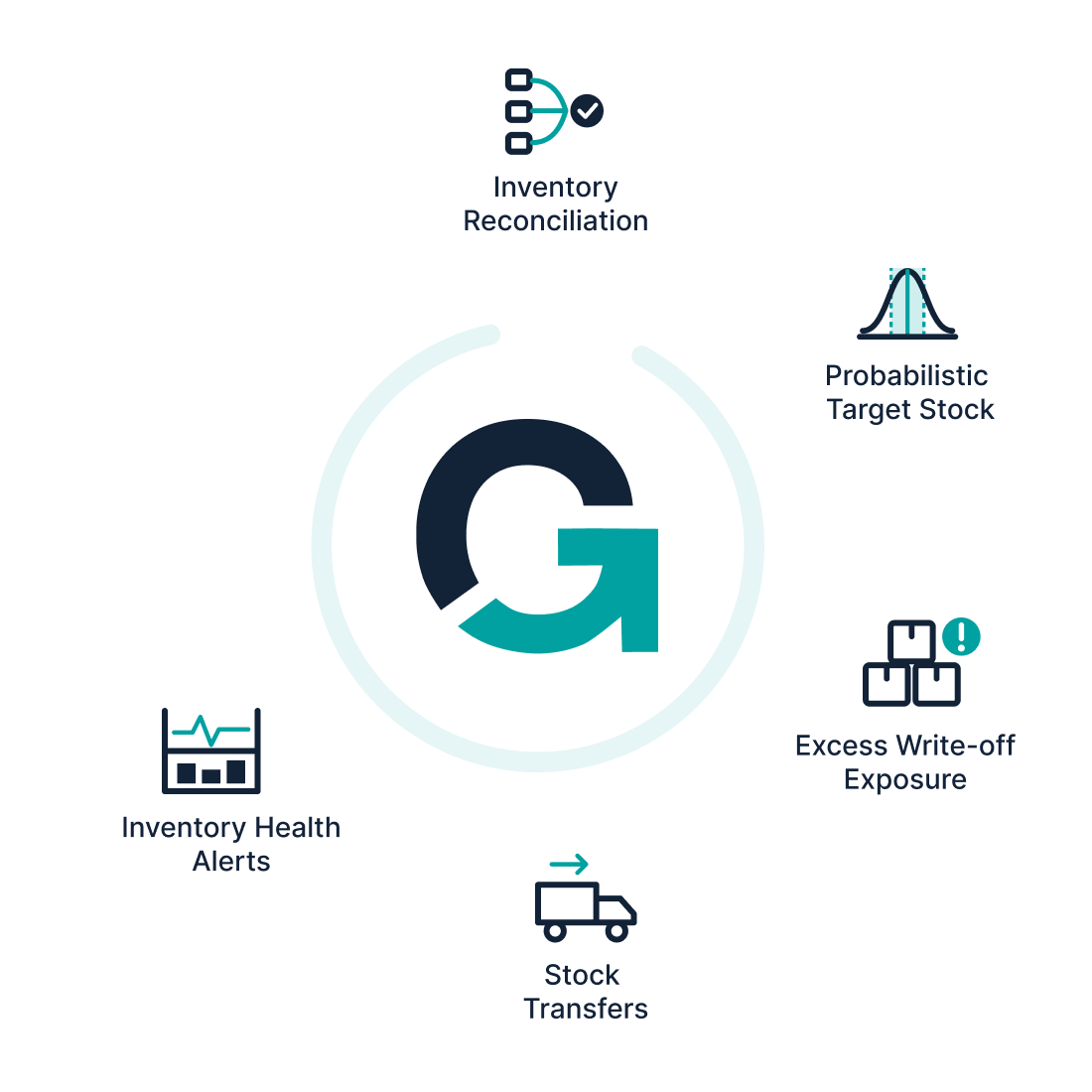

One Version of the Truth
Tills, warehouses, and finance systems often disagree. Growdhi settles them into one count every team trusts.
Inventory Optimization
Inventory is cash sitting on shelves. Inventory Optimization by Growdhi decides how much stock each location should hold, so that cash works where demand is strongest.
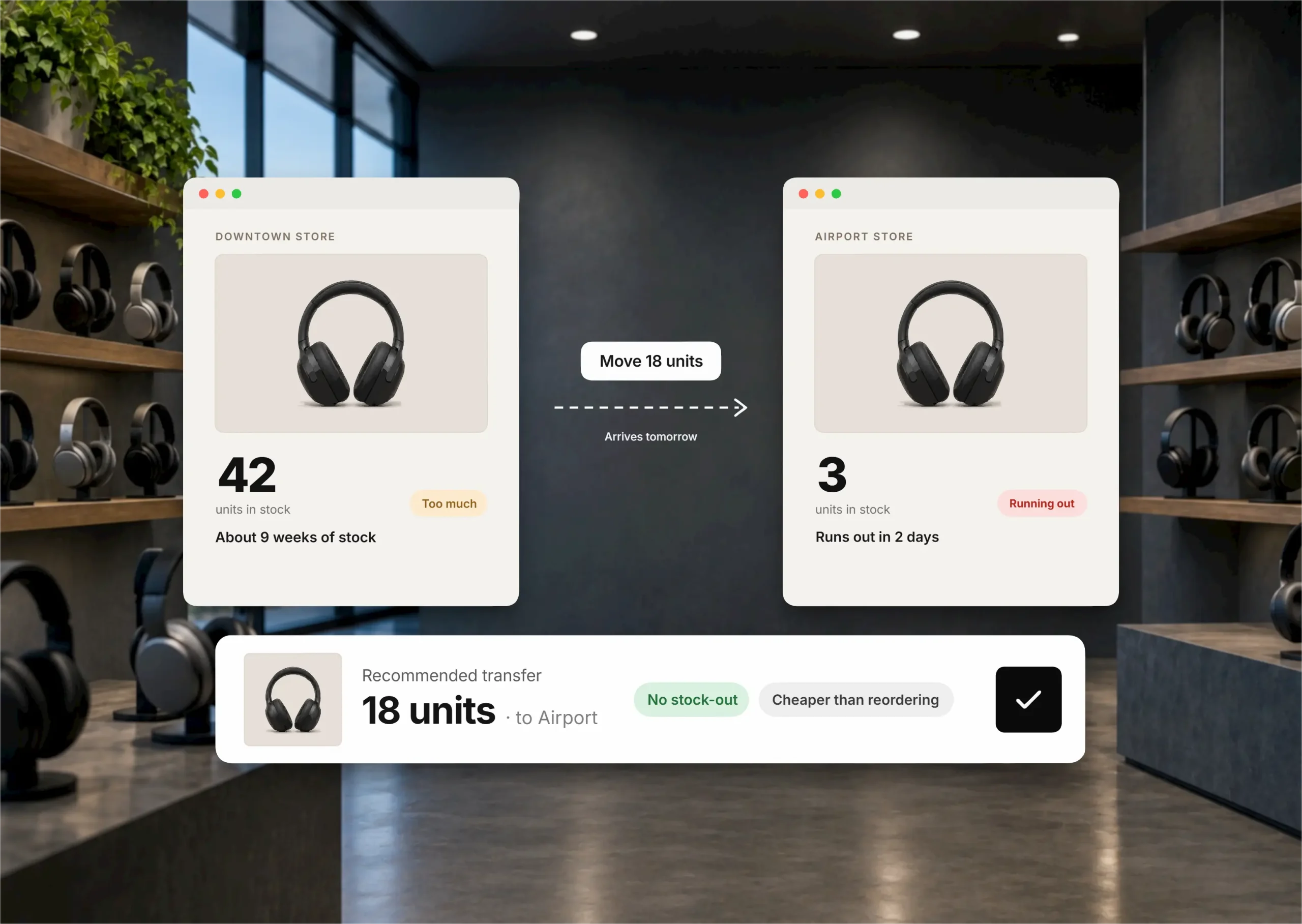
For much of the year, stock is in the wrong place. One store sells out of a bestseller while another holds far more than it will sell. Warehouses keep extra just in case, and stores ask for more than they need because deliveries feel unreliable. Each location makes sense of its own numbers, but nobody sees the whole network. The result costs you twice: sales lost where stock is short, and cash, space, and markdowns spent on stock sitting where nobody wants it.
Inventory Optimization, part of Growdhi’s Supply IQ, looks at your whole network at once. It sets target stock levels for each product in each location, based on expected demand, how quickly stock can be replenished, and the level of availability you want to offer. When stock drifts out of balance, it recommends transfers from where it’s sitting to where it will sell. And because it shares one stock picture with Replenishment and Logistics & Routing, orders, transfers, and shipments all draw on the same plan.
Every team works from the same stock figure, so arguments about whose number is right give way to decisions about what to do.
Set how much disagreement between systems is acceptable, which items need tighter control, and which decisions need a second signature. Stock-out warnings and excess checks always stay switched on, and every adjustment is logged with the reason behind it.
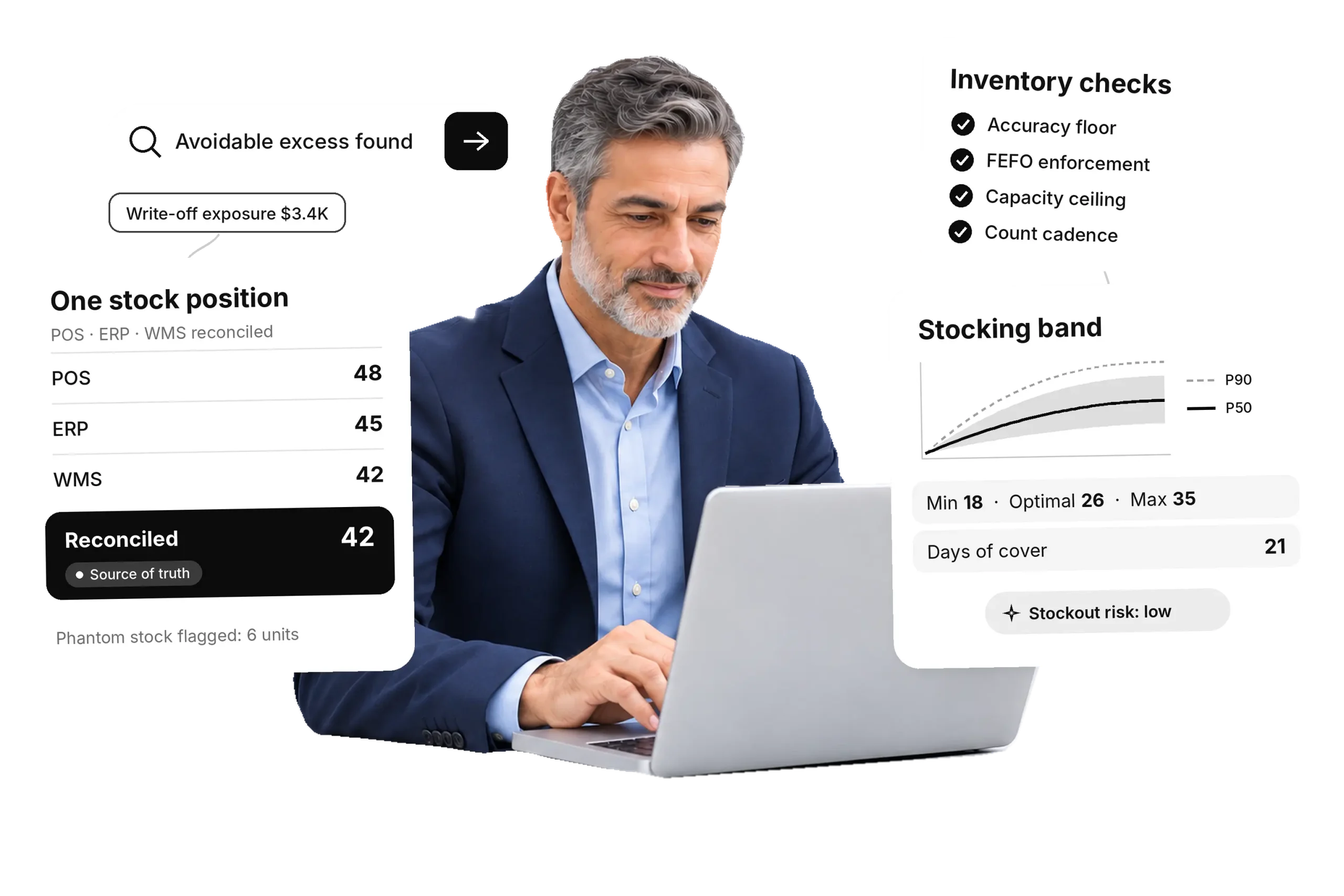
Tills, warehouses, and finance systems often disagree. Growdhi settles them into one count every team trusts.

Each product gets a minimum, ideal, and maximum stock level for every location, based on forecast demand.

Stock that exists only in the system blocks reorders. Growdhi flags it before shelves sit empty.

One store’s surplus can cover another’s shortage. Worthwhile moves are ranked by the money they save.
Good inventory decisions balance three things: availability, cash, and space. See how Growdhi sets targets, spots imbalances, moves stock, and measures the result.
Holding the same amount everywhere wastes cash in some places and loses sales in others. Growdhi sets a target for each product at each location.
Shortages and overstock often exist side by side. Growdhi watches the whole network and flags where stock is out of line.
A transfer turns stuck stock into a sale elsewhere. Growdhi recommends moves only when the numbers add up.
The first delivery of a new product sets up its whole season. Growdhi splits incoming stock by where it’s most likely to sell.
Inventory is money waiting to be earned back. Growdhi shows where it’s tied up and how quickly it’s turning into sales.
 Stock counts that don’t match
Growdhi's Inventory Optimization

Matches the stock numbers from your stores, finance system and warehouse into one count per location, and flags any it does not trust.

Sets a minimum, ideal and maximum for every product at every location, sized to demand and how long suppliers take to deliver.

Flags stockout risk, ranks transfers between stores by return, and turns stock heading for write-off into a decision, not a surprise.
Demand forecast from Demand Forecasting • Transit times from Logistics • Budget from your financial plan Products, suppliers and locations from your own source systems
Every agent reads the same position, so no two disagree about what is on the shelf.

Ranges to order toward; no reorders for ending products

Live stock, overstock and write-off risk to clear

Suspect counts, so forecasts never learn from bad data


Built for businesses with stock across many locations, Inventory Optimization adapts to your network, products, and availability goals.

Fashion & Apparel
A style can sell out in one store and stall in another. Moving it mid-season turns leftovers into full-price sales

GROCERY & HYPERMARKET
Fresh and fast-moving items need tight stock levels in each store. Targets set store by store keep shelves full without excess going to waste.

SPECIALTY STORE
Wide ranges spread stock thin across many items and locations. Holding slow sellers centrally and bestsellers locally keeps choice wide and cash free.
A space to explore ideas, spark perspectives, and turn curiosity into clarity. Where thinking evolves into meaningful insights that guide smarter decisions.

 Blog
Every fashion retailer commits money to product months before it knows what customers will buy. This guide explains how fashion margin is made and lost, how business models place that bet, and how leaders use AI in 2026.
Read Article Blog
Grocery is the one retail segment where a bad decision can expire before anyone reviews it. Margins run at a few cents on the dollar, fresh stock lasts days, and shoppers return every week to test whether the store still delivers value. Most enterprise grocers already own capable systems for forecasting, pricing, ecommerce and loyalty. […]
Read ArticleFind quick answers to common questions about our solutions, features, and capabilities. Everything you need to understand how it works and how it helps your business.
It decides how much stock each location should hold and recommends moving stock when locations fall out of balance. The aim is the availability you want, with as little cash tied up as possible.
It looks at expected demand for each product in each location, how long restocking takes, and the availability target you set. Fast sellers get higher targets, and slow sellers get leaner ones.
Yes, when the move is worth it. Each suggested transfer shows its cost and expected benefit, and you decide which ones go ahead.
Better-placed stock means less of it is needed overall. Excess is cut back where it isn’t selling, which frees cash for products and locations that are.
It’s the center of Supply IQ, setting the stock targets that Replenishment orders against and that Logistics & Routing ships from. It uses the Plan IQ demand forecast and flags slow stock to Price IQ’s Markdown Management.