



Targets That Add Up
Splitting a budget by hand leads to gaps and double counting. The plan breaks big targets down so every number adds up.
Merchandise Financial Planning
Replace static seasonal budgets with a connected AI agent that links every buying decision to your sales and margin targets, re-plans as demand shifts.
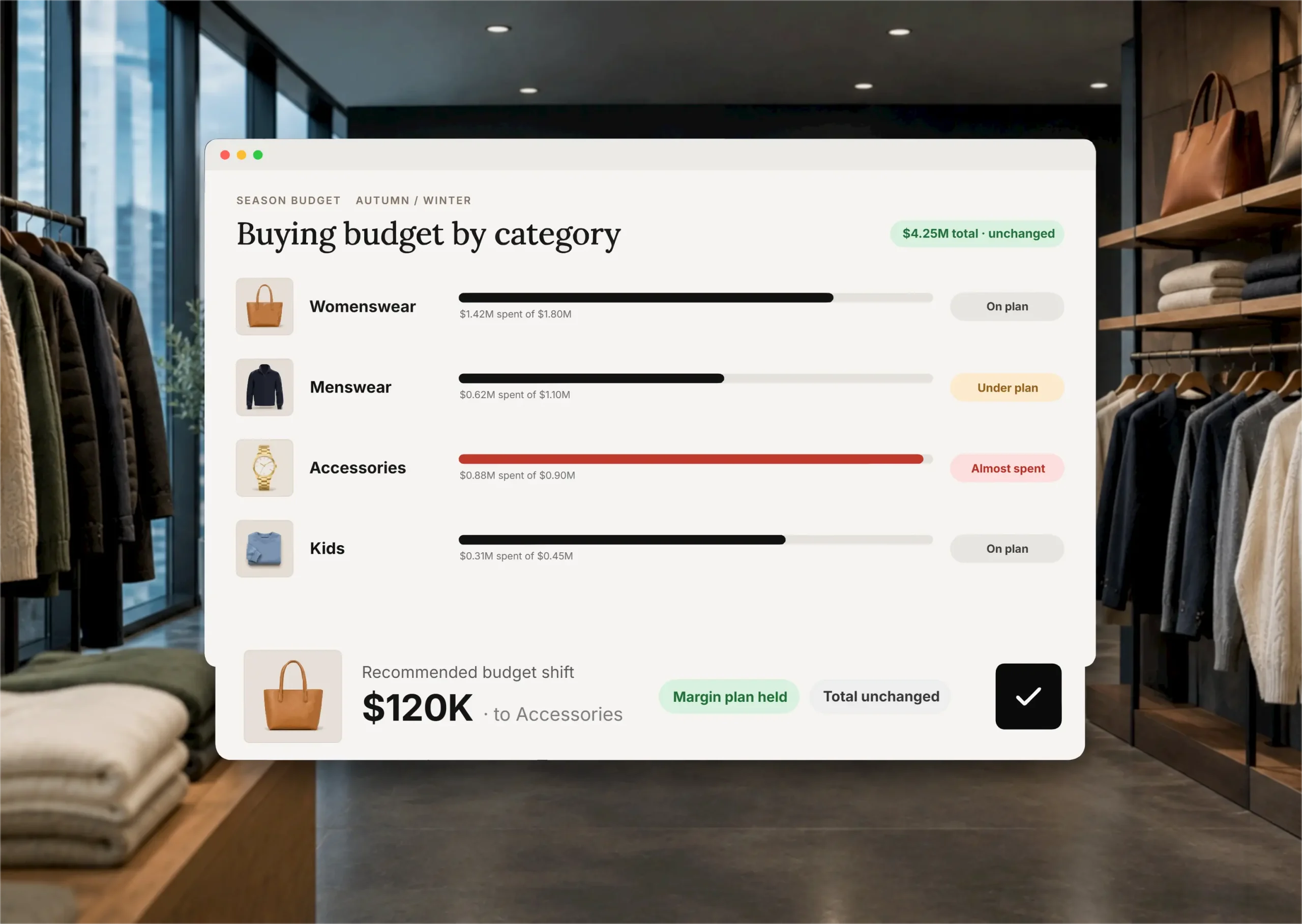
Every season starts with a financial plan: how much to sell, how much to buy, and how much stock to carry. When that plan lives in spreadsheets, it is set once and defended for months. Targets are split across categories by habit, not by demand. Every budget line looks equally certain, so the business can underbuy its best categories and overbuy its weakest. Midway through the season, variance shows up weeks late, and by then the money is already spent.
Merchandise Financial Planning, part of Growdhi’s Plan IQ, turns your revenue ambition into an open-to-buy budget by category, channel, region, and month. Instead of building its own forecast, it uses Growdhi’s AI-powered Demand Forecasting and checks your top-down targets against that bottom-up view of demand, so the gaps surface before the plan is locked. Each budget is a range, not a single figure. Each part of the spend is weighed against its odds of selling at a profit. During the season, variance is tracked daily and replans are recommended within a day.
AI runs the planning math across hundreds of category, channel, and month combinations. Your merchandise leaders decide what gets approved.
Adjust targets, approve changes, and see the effect on sales, profit, and stock before you commit. Finance and buying work from the same plan, so every number has an owner and every change has a reason.
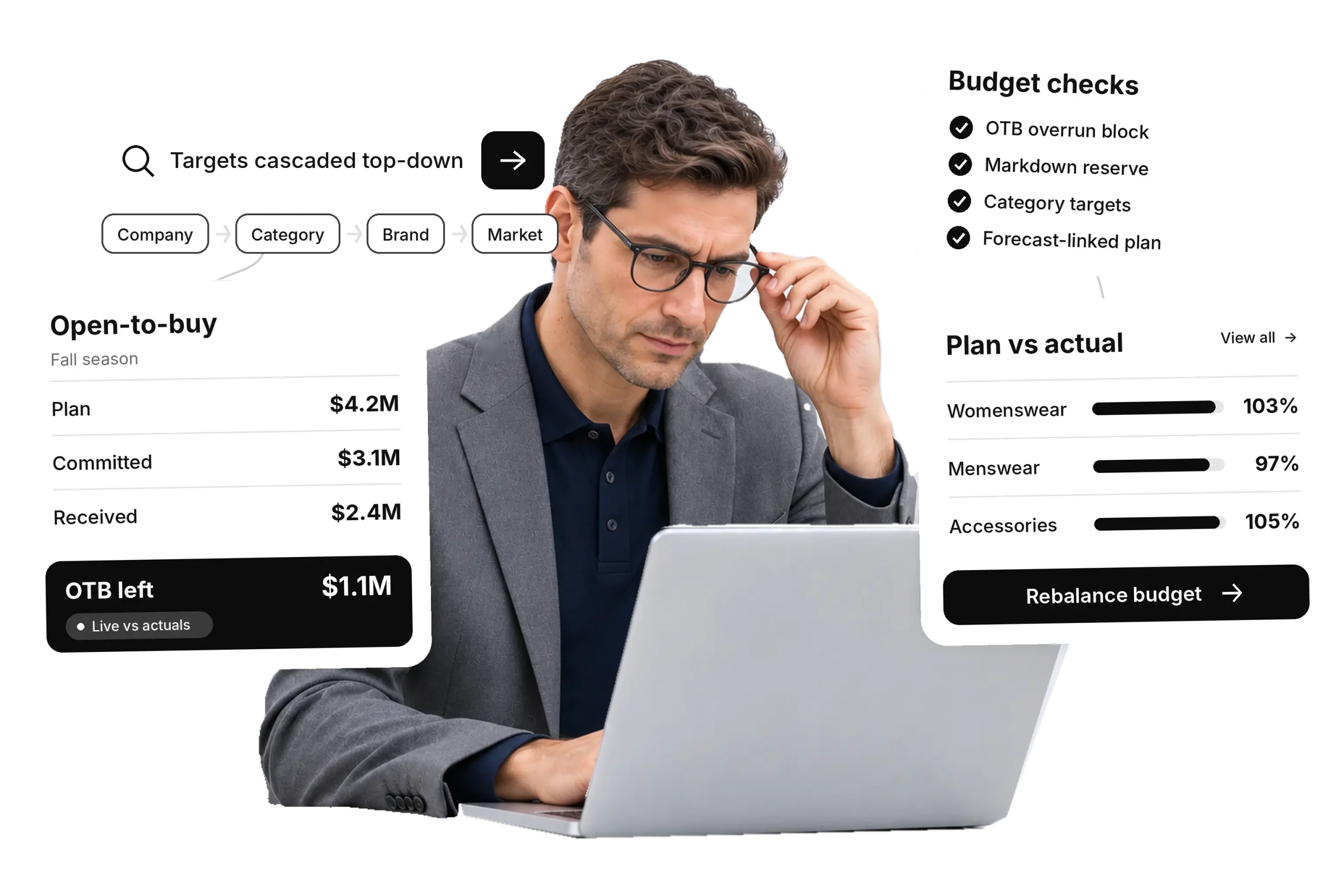
Splitting a budget by hand leads to gaps and double counting. The plan breaks big targets down so every number adds up.

Most teams find out they’ve overspent after the fact. Your remaining buying budget updates as sales come in.

A plan set months ago soon goes out of date. Targets adjust as real sales move away from the plan.

When finance and buyers keep separate spreadsheets, the numbers clash. Everyone works from one shared plan.
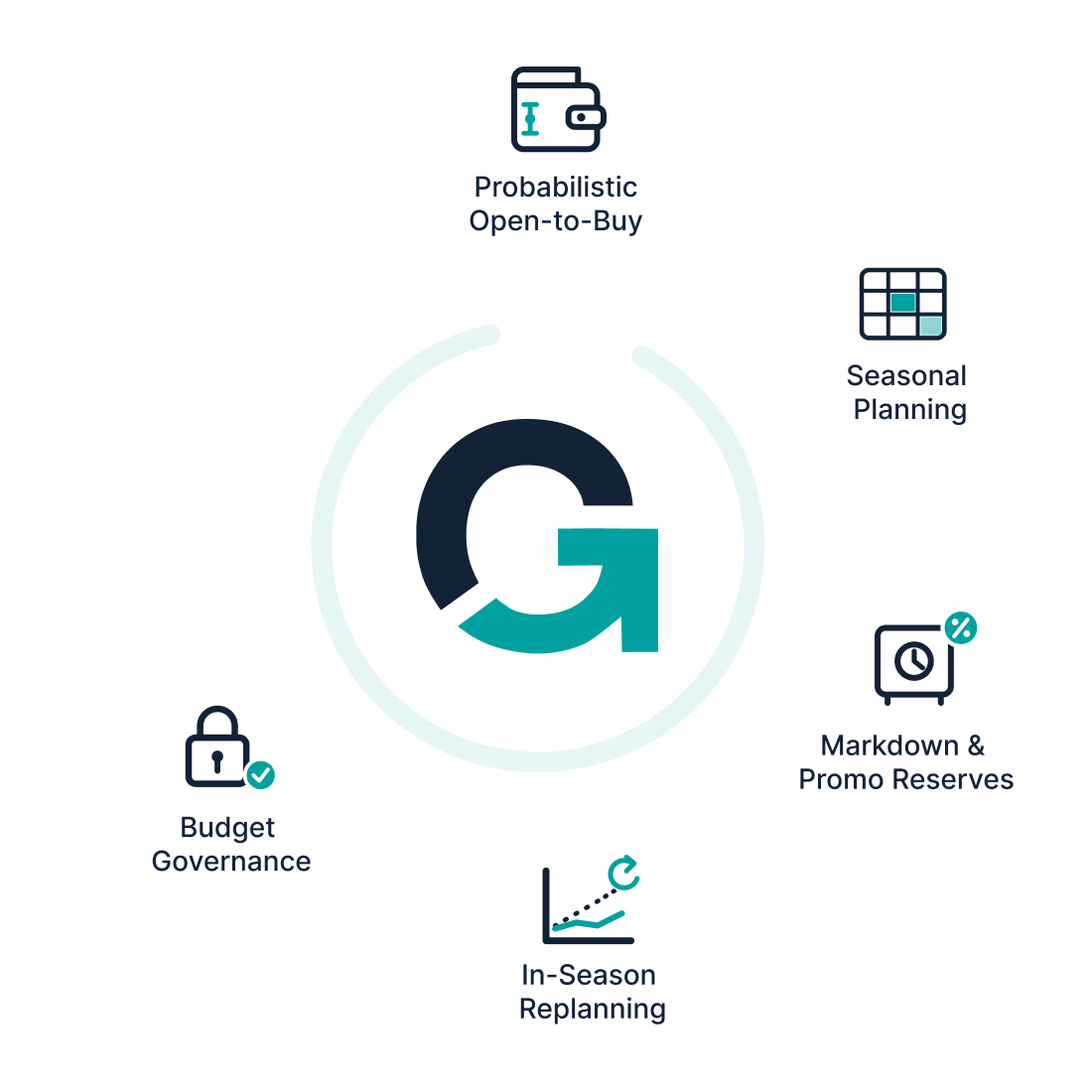
See how Merchandise Financial Planning builds the season plan, shows how much you can still buy, adjusts budgets as the season unfolds, protects key reserves, and keeps every spending decision accountable.
Good plans start from what shoppers are likely to buy. Targets are built from the demand forecast and checked against past results.
A company-wide target means little to a buyer. The plan splits it into targets each team can act on.
Open-to-buy is the buying budget left after counting the stock you hold and the orders already placed. It updates as the season moves.
No season goes exactly to plan. Compare actual results with targets, and adjust the rest of the season with them.
Finance, buying, and leadership work from the same numbers, with a clear record of what changed and who changed it.
 Revenue and margin goals
Growdhi's Merchandise Financial Planning

Splits revenue and margin goals into buying budgets by category, channel and season, checked against the demand forecast.

Moves spend toward categories most likely to sell at a good margin, and sets money aside for markdowns and promotions.

When sales drift from plan, proposes a revised budget within hours, not weeks, and sends large changes to an approver.
Demand forecast from Demand Forecasting • Stock targets from Inventory Optimization • Actual orders from Replenishment Promotion calendar from Promotions • Clearance spend from Markdown
Every buying and pricing agent works inside the same budget, so nobody overspends quietly.

The buying budget every order must stay within

The money set aside for clearance

Committed spend and budget against actuals, as it happens


Built for businesses that need buying budgets to keep pace with real sales, Merchandise Financial Planning adapts to your categories, your stores, and your seasons.

Fashion & Apparel
Fashion buys are made months ahead, but what sells only becomes clear once the season starts. A live plan shows how much budget is left, so you can buy more of what’s working and less of what isn’t.

Grocery & Hypermarket
Grocery runs on thin profits and steady weekly buying. Linking each category’s budget to real sales helps buyers avoid overstocking slow lines while keeping busy ones full.

Specialty Store
Specialty stores carry many products across many categories. Breaking targets down by category and store shows where money is best spent.
A space to explore ideas, spark perspectives, and turn curiosity into clarity. Where thinking evolves into meaningful insights that guide smarter decisions.

 Blog
Every fashion retailer commits money to product months before it knows what customers will buy. This guide explains how fashion margin is made and lost, how business models place that bet, and how leaders use AI in 2026.
Read Article Blog
Grocery is the one retail segment where a bad decision can expire before anyone reviews it. Margins run at a few cents on the dollar, fresh stock lasts days, and shoppers return every week to test whether the store still delivers value. Most enterprise grocers already own capable systems for forecasting, pricing, ecommerce and loyalty. […]
Read ArticleFind quick answers to common questions about our solutions, features, and capabilities. Everything you need to understand how it works and how it helps your business.
It’s the plan that links what you buy to what you expect to earn. It sets sales, profit, and stock targets for each category and month, and tracks how the season performs against them.
Open-to-buy is the buying budget you have left after counting the stock you hold and the orders already placed. It tells buyers how much they can still spend without going over plan.
Spreadsheet plans are built once and updated by hand. Merchandise Financial Planning starts from the demand forecast, breaks targets down automatically, and updates the remaining budget as sales come in.
Yes. You can compare actual results with the plan at any time, update targets for the rest of the season, and move budget from slow categories to strong ones.
It is part of Plan IQ. It builds on the Demand Forecasting forecast and sets the budget that Assortment Optimization plans within, so targets, ranges, and buying all work from the same view of demand.