Fashion & Apparel
Clearing the season with margin intact
Season-end clearance is unavoidable, but cutting too deep too early gives away the margin the season earned.
Price IQ is one system that protects margin while it drives revenue, bigger baskets, and higher volume, instead of trading one for the other.
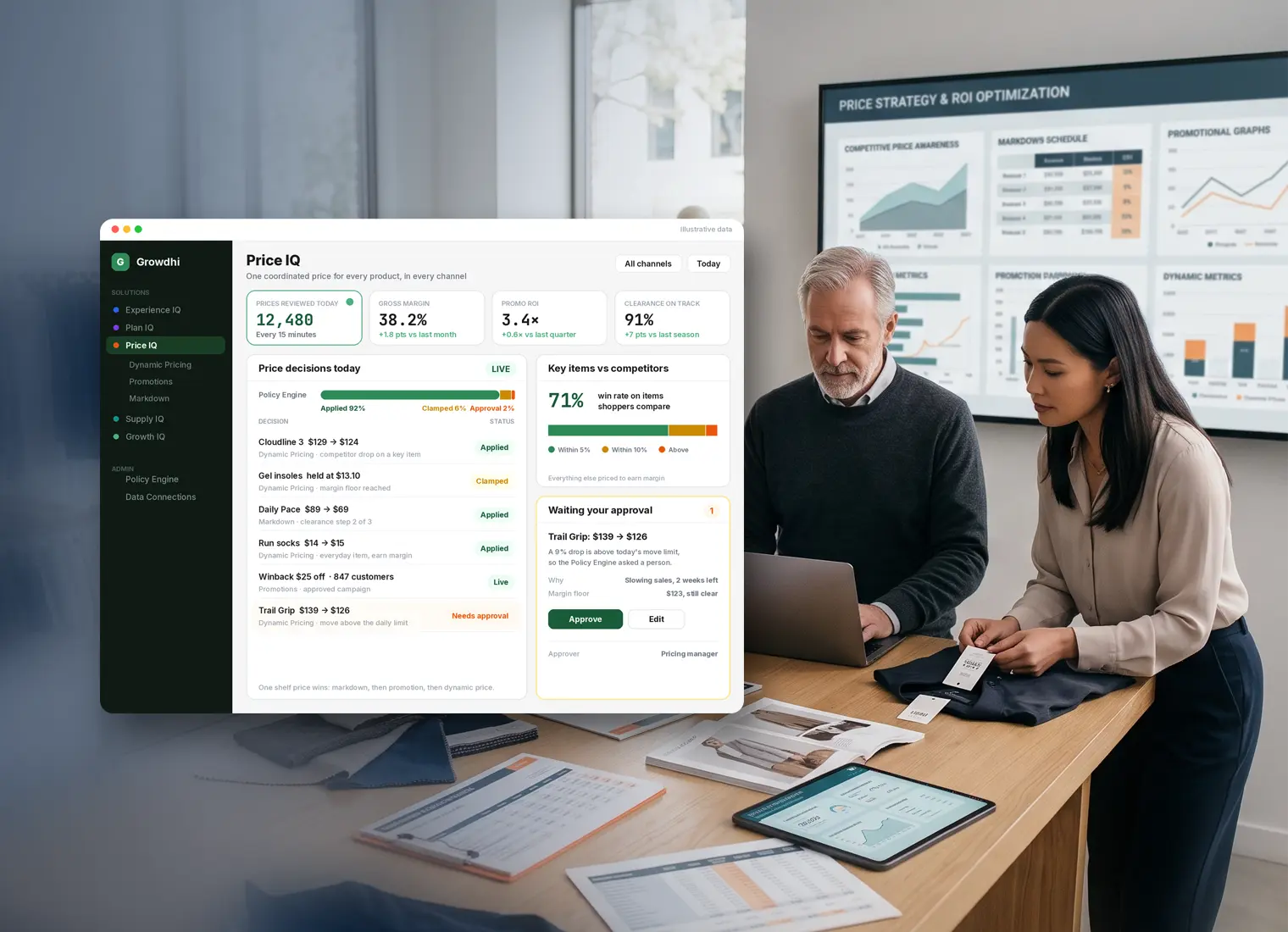
Most pricing decisions are still reactive: match a competitor, apply a seasonal discount, mark down when stock gets old. Manual pricing and disconnected promotions erode margin silently, create customer dissatisfaction, and impact brand image. Price IQ sets dynamic prices for better ROI, targets promotions with precision, and sets markdowns to increase conversions across every channel.
If you are looking for any of the benefits below, you should see the video.
Pricing is no longer just a number; it's a critical growth driver. Price IQ helps you stay ahead with smarter, real-time pricing decisions through our autonomous solutions like Dynamic Pricing, Promotion, and Markdown.
Set dynamic pricing strategies to maximize revenue and margins.
Design targeted promotions that boost sales and engagement.
Optimize markdown strategies to clear stock and protect margins.
Growdhi's Price IQ
Identifies and clears aging stock at the right depth, right week.
Recommends offers and campaigns that drive incremental lift.
Continuously adapts pricing to market conditions while protecting margin.
Stock & lifecycle from Supply IQ • Demand forecast from Plan IQ • CLTV tier from Growth IQ
Price intelligence powers other IQs across the platform.
Live price on every storefront
Clearance offers for loyalty segments
Price & Promo Inputs
Most businesses still rely on reactive, manual pricing approaches. Price IQ replaces them with real-time, data-driven intelligence that drives growth.
Without
With
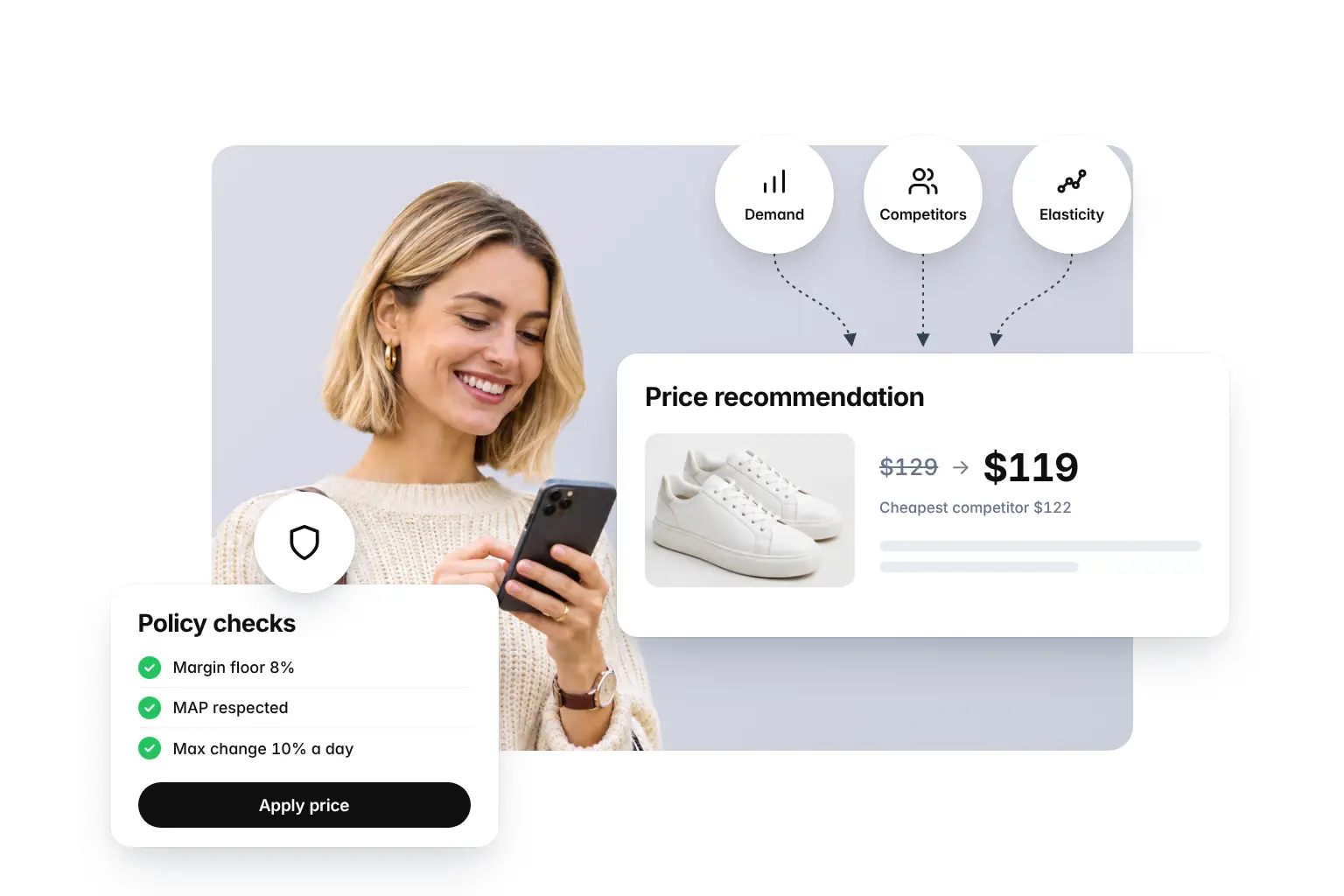
Prices respond to demand, competitor moves, and elasticity together.

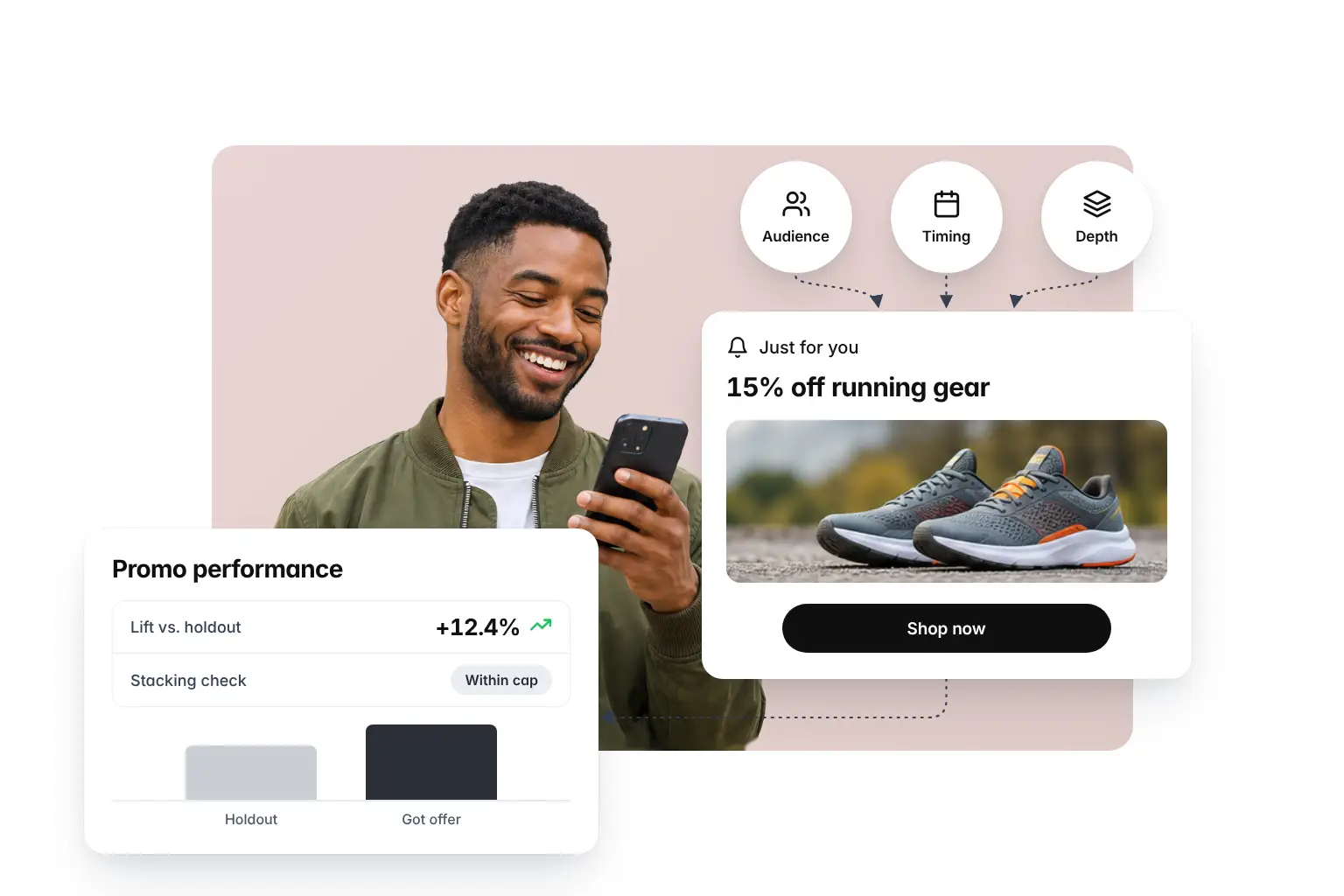
Promotions are judged on the incremental sales they created.
Each offer is tuned to the customer, channel, and timing.
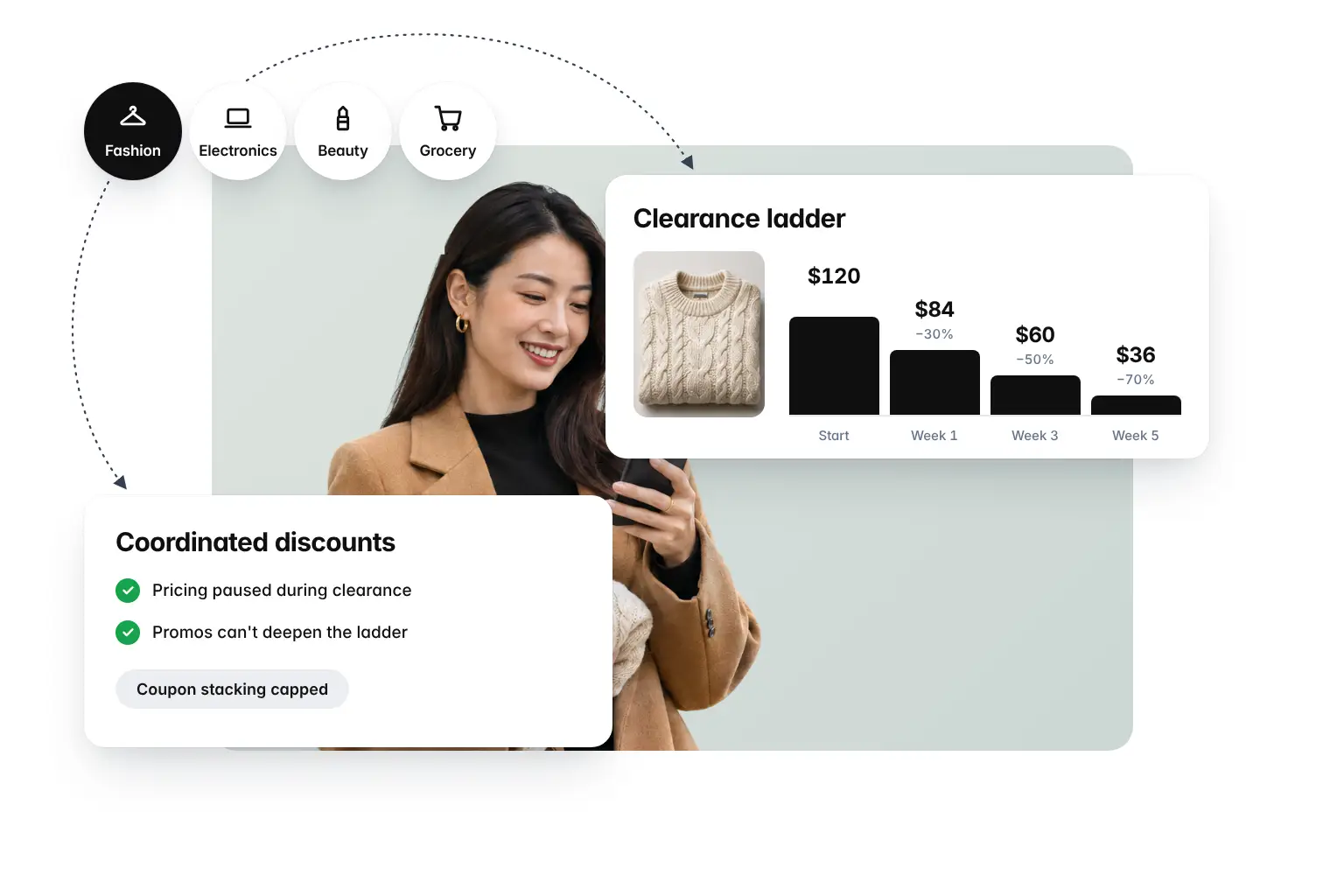
Markdowns follow a clearance ladder timed to sell-through.
One coordinated decision governs every price a SKU carries. Built for industries where pricing directly impacts demand, conversion, and profitability. Price IQ adapts to your business model and market dynamics.
Fashion & Apparel
Season-end clearance is unavoidable, but cutting too deep too early gives away the margin the season earned.
Grocery & Hypermarket
Best-before markdowns have to act within hours, which leaves no room for a slow clearance ladder.
Specialty Store
With fewer SKUs, every discount has an outsized impact on margin, and blanket promotions simply give money away.
Explore insights on pricing, promotions, and markdowns that help retailers protect margin. This is where better pricing ideas become decisions that make every discount purposeful.
Blog
Every fashion retailer commits money to product months before it knows what customers will buy. This guide explains how fashion margin is made and lost, how business models place that bet, and how leaders use AI in 2026.
Read Article
Blog
Grocery is the one retail segment where a bad decision can expire before anyone reviews it. Margins run at a few cents on the dollar, fresh stock lasts days, and shoppers return every week to test whether the store still delivers value. Most enterprise grocers already own capable systems for forecasting, pricing, ecommerce and loyalty. […]
Read ArticleFind quick answers to common questions about Price IQ, its features, capabilities, and everything you need to understand how it works and how it helps your business.
Price IQ is Growdhi’s AI pricing suite for retailers. It combines three specialist agents: Dynamic Pricing sets the everyday shelf price, Promotion Optimization creates personalised offers, and Markdown Optimization plans clearance of ageing stock. All three read from one shared plan, so each product has a single, consistent price per channel. A policy engine checks every price change against margin and brand rules before it goes live.
AI dynamic pricing recommends shelf prices by weighing competitor prices, the true landed cost of each item and forecast demand. Price IQ keeps Key Value Items (the products shoppers use to judge whether a store is expensive) close to the market average and prices the long tail for margin. It keeps online and in-store prices consistent and never prices below the retailer’s margin floor or a supplier’s minimum advertised price.
Retailers protect margin by measuring each promotion’s incremental lift (sales above what would have happened anyway) instead of total sales during the offer. Price IQ creates per-customer offers based on customer value and delivers them through each shopper’s preferred channel at the best send time. It caps discount stacking and offer frequency, enforces budgets, and blocks promotions that simply pull sales from full-price products.
AI markdown optimization decides when and how deeply to discount slow-selling stock so it clears for the most recoverable value. Price IQ only marks down retailer-owned stock and checks first whether transferring the stock to another location would recover more, net of freight. It then builds a markdown plan whose timing suits the category: days apart for perishables, staged through the season for fashion. A terminal floor stops a markdown that would destroy more value than holding the stock.
Price IQ gives every product one live price per channel, decided by a fixed order of precedence: an active markdown plan first, then an active promotion, then dynamic pricing, then the base price. Twenty-one policies check every price action before it goes live. Each check either passes it, adjusts it automatically, flags it, blocks it, or sends it to a person for approval. Coupons are checked against each customer’s total combined discount.
Price IQ needs reconciled landed cost from POS, ERP and warehouse systems, plus competitor prices, the demand forecast, sales and customer segment history, and channel and store data. Retailers set each market’s retail calendar, currency, margin floors and essential items list. Price IQ then runs in shadow mode, recommending prices without applying them, and is measured against current decisions. Automation is switched on gradually as results prove out.