



Early Risk Signals
By the time sales drop, the customer is gone. Risk scores flag the fade early.
Churn & Winback
Customers rarely tell you they’re leaving. Churn & Winback by Growdhi spots the early signs and acts while there’s still time to bring them back.
Few customers close an account or say goodbye. They visit less, buy smaller baskets, and drift toward a competitor until one day they simply stop. By the time a report shows it, they’re gone. Most win-back efforts then send the same discount to everyone flagged as inactive: your most valuable customers, your occasional bargain hunters, and people who were never really going to leave. The budget spreads thin, your best customers get a generic message, and margin goes to shoppers who didn’t need persuading.
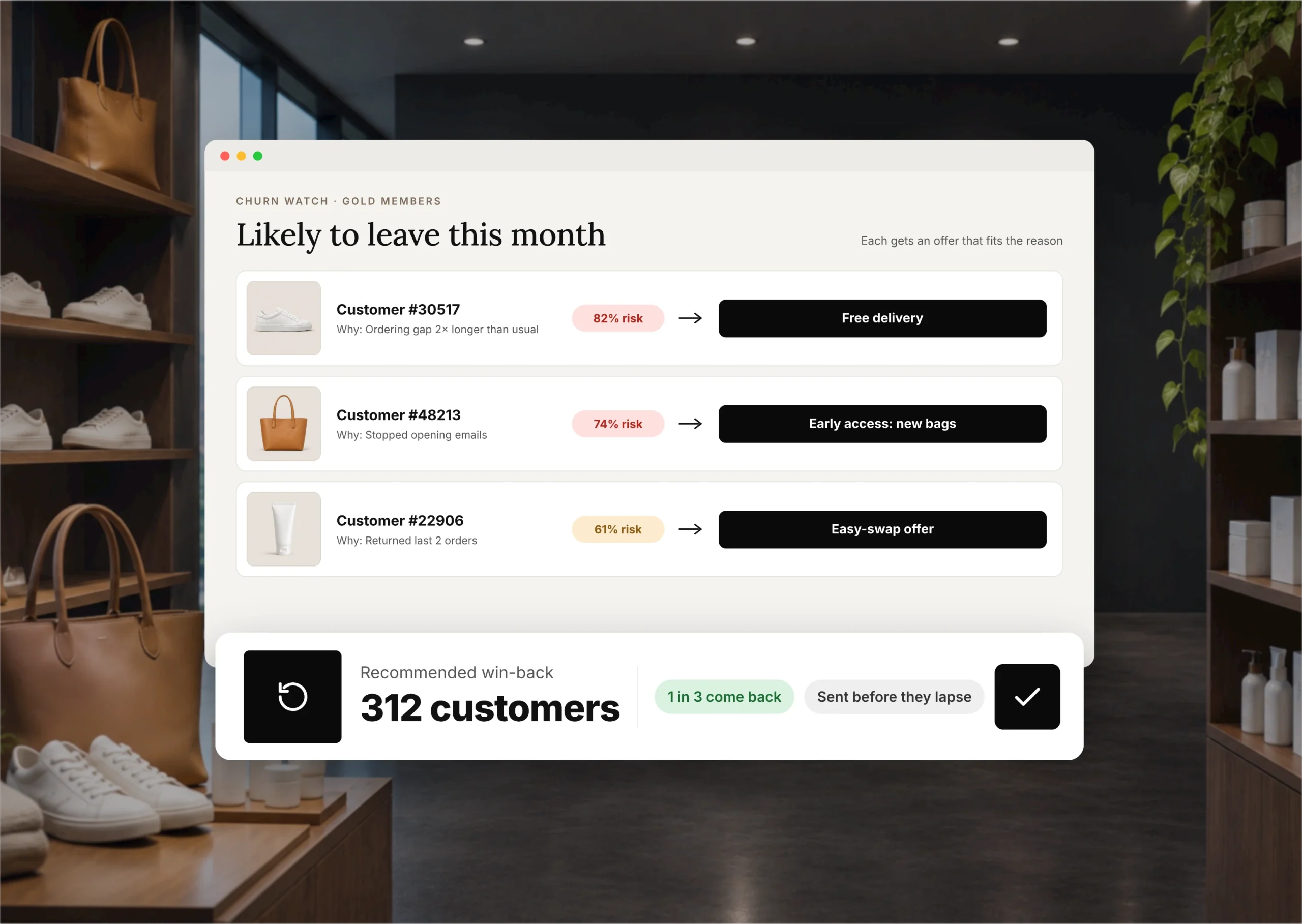
Churn & Winback, the retention agent in Growdhi’s Growth IQ, watches for the fade. It scores each customer’s risk of leaving and shows the reasons behind each score, such as fewer visits or shrinking baskets. It then weighs that risk against the customer’s value from CLTV Prediction, so effort goes to the customers worth saving. Win-back sequences run automatically across channels, with a policy engine that controls offers and budgets. When a customer returns, their value is re-scored, and the next decision starts from there.
A loyal customer and a bargain hunter need very different reasons to return. You set the rules, and Churn & Winback matches each one.
Decide which offers each tier can receive, how much you’ll spend to save a customer, and which channels to use. The policy engine keeps each win-back within those limits, and the AI Shopping Assistant adjusts its tone when an at-risk customer comes back.
By the time sales drop, the customer is gone. Risk scores flag the fade early.

A score alone doesn’t tell you what to do. Each one comes with the reasons behind it.

Not every lapsing customer is worth the same spend. Retention budgets follow value.

Manual campaigns arrive too late. Sequences run on their own, within your rules.
Keeping a loyal customer costs less than replacing one. See how Growdhi spots risk, explains it, prioritizes by value, and runs win-backs that know when to stop.
Customers show signs long before they stop buying. Growdhi turns those signs into a risk score for each customer.
Different reasons call for different responses. Each score comes with the behavior behind it, so your team knows how to act.
Losing a Platinum customer costs far more than losing a one-time buyer. Growdhi weighs risk against value before spending a cent.
Timing decides whether a win-back works. Sequences start when risk rises, not weeks later.
A returning customer is a new starting point. Growdhi re-scores them and carries the lesson into the next decision.
 Customers going quiet
Growdhi's Churn & Win-back

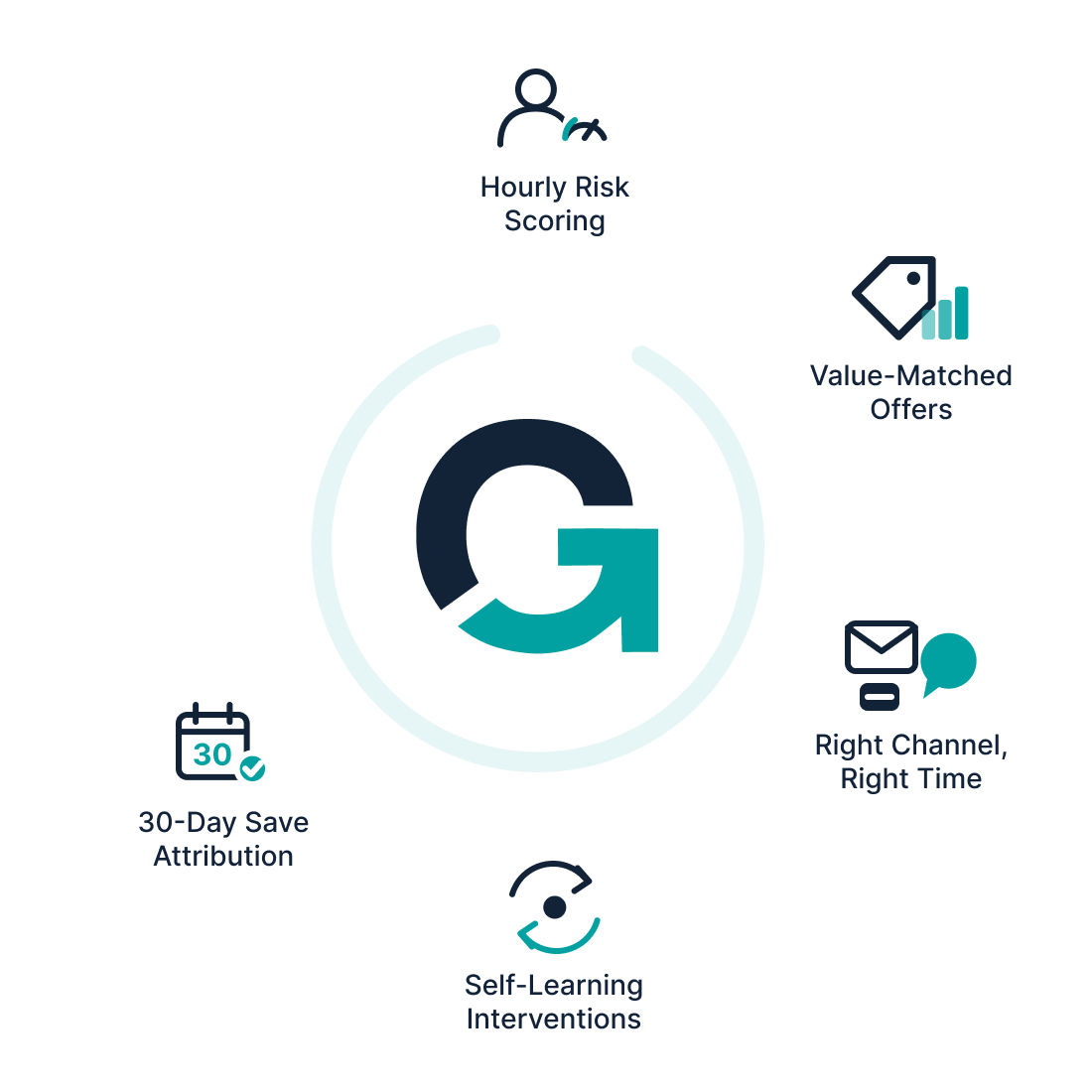
Scores every customer’s risk of leaving, again the moment a warning sign appears, and names the top reasons behind each score.

Picks the offer each customer is worth: free delivery for some, a personal call for your best, all within budget and contact limits.

Tracks who came back over the next 30 days, credits the channel that worked, and drops offers that stop saving customers.
Customer value from CLTV • Basket habits from Market Basket Analysis • Frustration signals from AI Shopping Assistant Price sensitivity from Dynamic Pricing • Orders, returns and email engagement from your systems
Churn decides who, when and what. Other agents issue the offer and send the message.

Issues the coupon, within its own budget and limits

Your marketing tools send the message

A warmer tone and tailored picks for at-risk shoppers


Built for businesses that depend on repeat customers, Churn & Winback adapts to your customers, channels, and retention budget.

Fashion & Apparel
A regular who stops browsing new collections is often already shopping elsewhere. Early flags and personal offers bring them back before next season.

GROCERY & HYPERMARKET
Grocery customers rarely leave at once. They buy a little less each week. Spotting that early lets you act before the weekly shop moves away.

SPECIALTY STORE
One lost regular is hard to replace in specialty retail. Value-tiered win-backs focus on high-value customers showing early signs of drifting.
A space to explore ideas, spark perspectives, and turn curiosity into clarity. Where thinking evolves into meaningful insights that guide smarter decisions.

 Blog
Every fashion retailer commits money to product months before it knows what customers will buy. This guide explains how fashion margin is made and lost, how business models place that bet, and how leaders use AI in 2026.
Read Article Blog
Grocery is the one retail segment where a bad decision can expire before anyone reviews it. Margins run at a few cents on the dollar, fresh stock lasts days, and shoppers return every week to test whether the store still delivers value. Most enterprise grocers already own capable systems for forecasting, pricing, ecommerce and loyalty. […]
Read ArticleFind quick answers to common questions about our solutions, features, and capabilities. Everything you need to understand how it works and how it helps your business.
Churn is when customers stop buying from you. In retail, it usually happens gradually, as visits and basket sizes shrink, rather than with a clear goodbye.
AI studies changes in each customer’s behavior, such as fewer visits or smaller baskets, and turns them into a risk score with the reasons behind it.
No. Growdhi weighs each customer’s risk against their value, so offers go to the customers worth saving, and those likely to stay anyway aren’t given margin they don’t need.
Yes. The policy engine sets which offers each tier can receive, how much can be spent, and which channels are used, and every sequence stays within those limits.
It’s part of Growth IQ, using CLTV Prediction to weigh value. Offers come through Price IQ’s Promo Optimization, and Experience IQ’s Recommendation Engine and AI Shopping Assistant shape the returning customer’s next visit.