



Every Store, Its Own Range
One range for every store ignores local tastes. Each store or store group gets a range built for its shoppers.
Assortment Optimization
Decide which products to add, keep, or cut, based on how each one performs and what shoppers would buy instead.
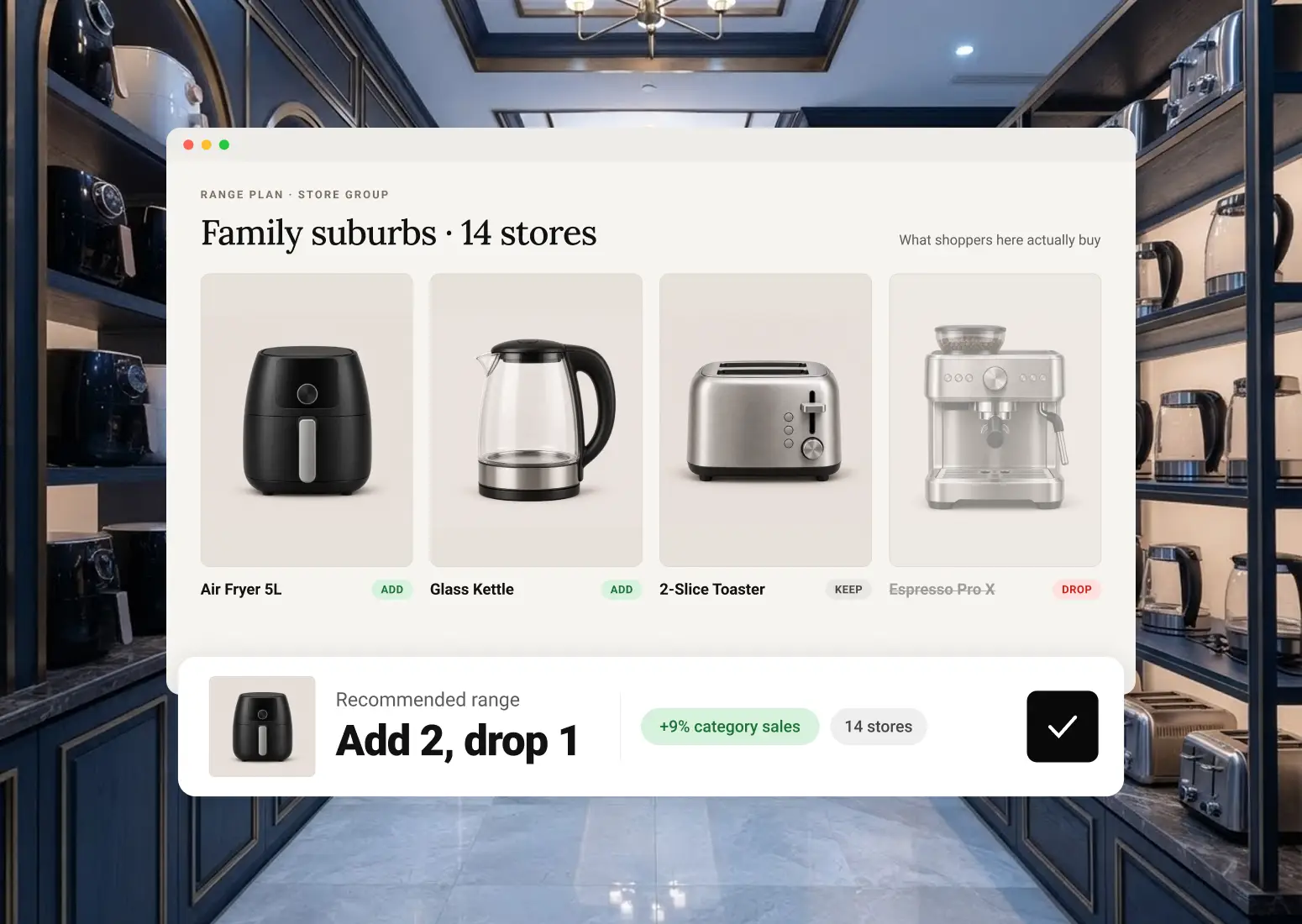
Range decisions that pay for their shelf space
Assortment Optimization doesn’t just trim the range, it makes every product justify its place. Most range decisions are still made once a season, in a review room, using chain-wide sales and gut feel. Every store gets roughly the same products, whether its shoppers want them or not. Weak sellers stay because nobody knows what removing them would cost, and gaps go unnoticed because shoppers can’t buy what you never stocked. The result is shelf space and cash spent on the wrong products. What looks like a sales problem is often a range problem.
Assortment Optimization, part of Growdhi’s Plan IQ, builds ranges from evidence. It studies how each product sells in each store, which products shoppers treat as alternatives, and how much of a product’s sales would move elsewhere if it were removed. It then recommends what to add, keep, or cut for each store or group of similar stores, within your space and budget. Because it runs on the Plan IQ demand forecast and the Merchandise Financial Planning budget, every range decision fits the season’s targets. Leadership gets a range strategy it can defend, store by store.
Let AI handle the heavy lifting of analyzing thousands of products across every store, without handing over the decisions that shape your brand.
Set the rules that matter, such as must-carry products, brand commitments, and space limits, then review recommendations before they go live. Your merchants keep the final call, now backed by evidence instead of instinct.
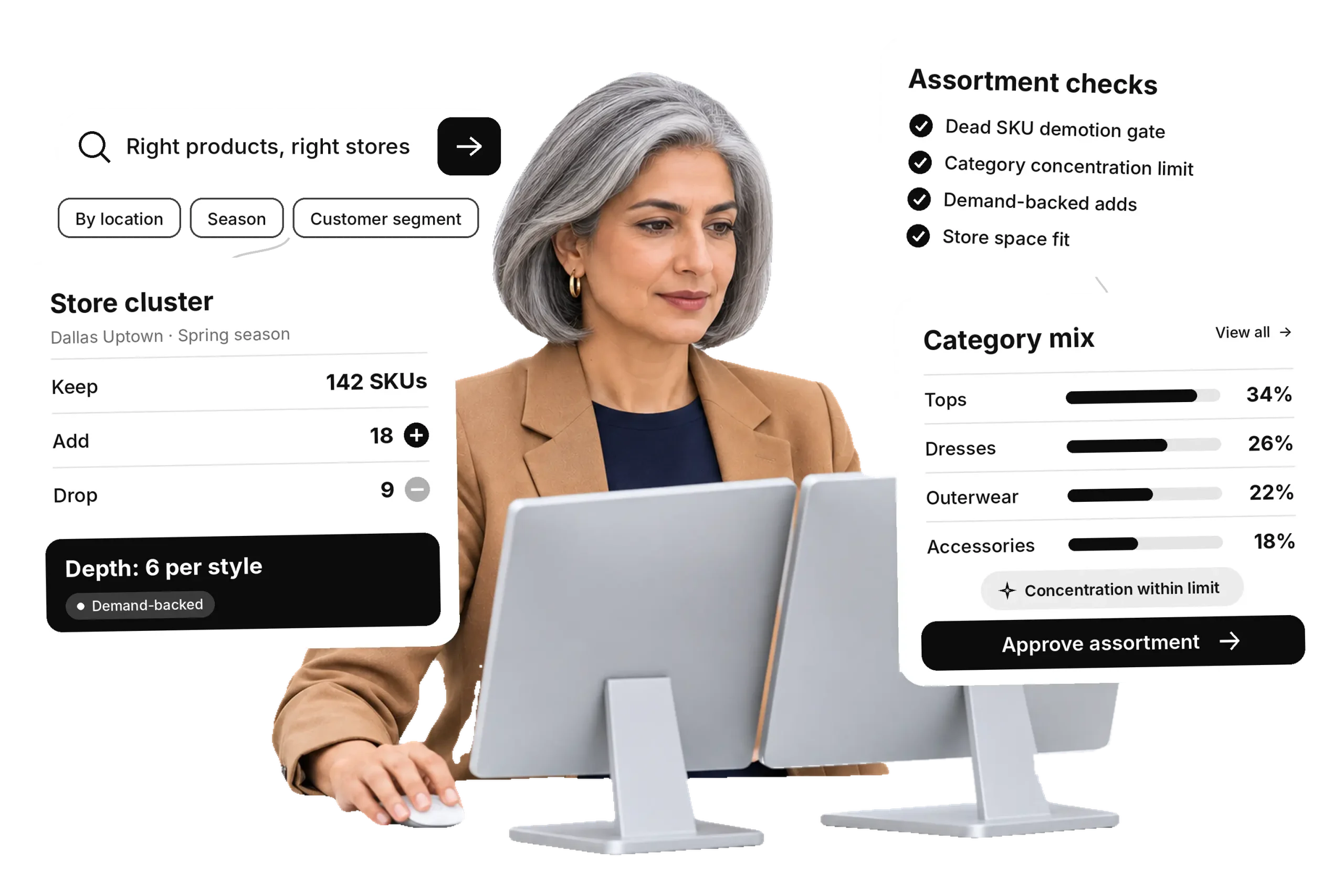
One range for every store ignores local tastes. Each store or store group gets a range built for its shoppers.

Removing a product feels risky when you can’t see the impact. AI estimates how much of its sales would move to other products.

Gaps in your range send shoppers elsewhere. AI highlights the products and price points your stores are missing.

Range plans often ignore what finance has agreed. Every recommendation fits your space and buying budget.
Go beyond the annual range review. See how Assortment Optimization groups your stores, measures what each product earns, estimates the impact of every change, and keeps ranges within space and budget.
Stores that look alike on paper often sell very differently. AI groups stores by real buying patterns, so each group gets a range that fits.
Every product competes for space and cash. AI shows which ones pay their way, and which ones don’t.
When a product is removed, some shoppers buy something similar and some leave. AI estimates both, so cuts don’t cost more than they save.
The sales you never made don’t show up in reports. AI spots the gaps shoppers notice before you do.
A recommendation is only useful if it fits the store and the plan. Every range is built within your physical and financial limits.
 A season’s range to plan
Growdhi's Assortment Optimization

Weighs each product’s likely sales and margin against the next-best use of the same slot, instead of a simple keep-or-drop call.

Builds a range for each group of similar stores that fits the buying budget and covers the products customers buy together.

Re-checks the range within hours when demand shifts, adds new products carefully and flags slow sellers to drop from the range.
Demand forecast from Demand Forecasting • Buying budget from Merchandise Financial Planning • Basket pairings from Growth IQ Stock targets from Inventory Optimization • Supplier performance from Replenishment
Planning, pricing and the shop floor all work from the same list of products.

Which products to stock, and how deep, per store

Margin scores, and products leaving the range to clear

Only products in the range are shown to shoppers


Built for retailers whose growth depends on carrying the right products in the right stores, Assortment Optimization adapts to your categories, your stores, and your brand.

Fashion & Apparel
Shoppers in different stores want different styles, sizes, and price points. Store-group ranges put the right mix of each collection where it will sell.

Grocery & Hypermarket
Thousands of products compete for limited shelf space. Knowing which items shoppers would replace, and which they would miss, keeps the range lean without losing loyal shoppers.
Specialty Store
A deep range is what draws specialty shoppers, but not every product earns its place in every store. Store-level insight shows where depth pays and where it only ties up cash.
A space to explore ideas, spark perspectives, and turn curiosity into clarity. Where thinking evolves into meaningful insights that guide smarter decisions.

 Blog
Every fashion retailer commits money to product months before it knows what customers will buy. This guide explains how fashion margin is made and lost, how business models place that bet, and how leaders use AI in 2026.
Read Article Blog
Grocery is the one retail segment where a bad decision can expire before anyone reviews it. Margins run at a few cents on the dollar, fresh stock lasts days, and shoppers return every week to test whether the store still delivers value. Most enterprise grocers already own capable systems for forecasting, pricing, ecommerce and loyalty. […]
Read ArticleFind quick answers to common questions about our solutions, features, and capabilities. Everything you need to understand how it works and how it helps your business.
It’s the process of deciding which products each store should carry, and in what variety. AI makes those decisions from evidence, so every product on the shelf has a reason to be there.
It looks at each product’s sales and profit, and estimates how much of those sales would move to similar products if it were removed. Products that cost more space than they earn, and that shoppers would readily replace, become candidates to cut.
Yes. You set must-carry products and brand rules, and every recommendation respects them. Your merchants review and approve changes before they go live.
Traditional reviews happen once a season and use chain-wide averages. Assortment Optimization works store by store, estimates the impact of each change, and can be revisited whenever demand shifts.
It is part of Plan IQ. It builds on the Demand Forecasting forecast and stays within the Merchandise Financial Planning budget, so your range, budget, and buying all follow the same view of demand.