



True Everyday Demand
A big sale makes normal weeks look busier than they are. The forecast keeps sale weeks and normal weeks apart.
Demand Forecasting
Move past spreadsheet forecasts with agentic AI that learns your baseline demand, seasonal swings, and promotion lift, to turn them into store-level forecasts from day one!
Predict demand that is not just based on last year’s sales
Every plan your business sets begins with a view of demand. When that view is built from last year’s sales and adjusted by judgment, errors compound quietly. Stockouts erase demand from the record, so it looks weaker than it was. Promotion weeks inflate the baseline. Chain averages hide store-level reality. New products start with no history at all. And a single forecast number never states its own risk, so a predictable product and an uncertain one look exactly the same on the plan. The result is plans that miss in both directions, with no clear explanation of why.
Demand Forecasting, part of Growdhi’s Plan IQ, runs on an AI foundation model that delivers usable forecasts from day one and sharpens as it learns your business. It corrects sales history for stockouts and data gaps, separates baseline demand from seasonal, promotional, and event effects, and forecasts every product by store, channel, and day. Each forecast is a probability range with a reliability rating measured against actual sales. Forecasts reconcile from store level up to category and business totals, and are checked against your financial plan. The result is one governed view of demand that the rest of Growdhi builds on.
Let AI handle the heavy lifting of forecasting thousands of products across every store, without taking planning decisions away from your team.
Review forecasts by product, category, or store, see how each compares with actual sales, and focus attention on the exceptions that matter. Your planners bring the market knowledge, the model brings the scale, and the plan reflects both.
A big sale makes normal weeks look busier than they are. The forecast keeps sale weeks and normal weeks apart.

A company-wide average hides what each store really sells. Each store gets its own forecast.

A new product has no past sales data. AI looks at similar products you’ve sold to estimate how it will do.

When teams use different forecasts, orders and prices clash. One shared forecast guides how much to order, what to charge, and when to discount.
Don’t just rely on last year’s numbers. See how Demand Forecasting breaks demand into its drivers, forecasts at store level, handles new products, and gives your planners a clear view of accuracy so they can act with confidence.
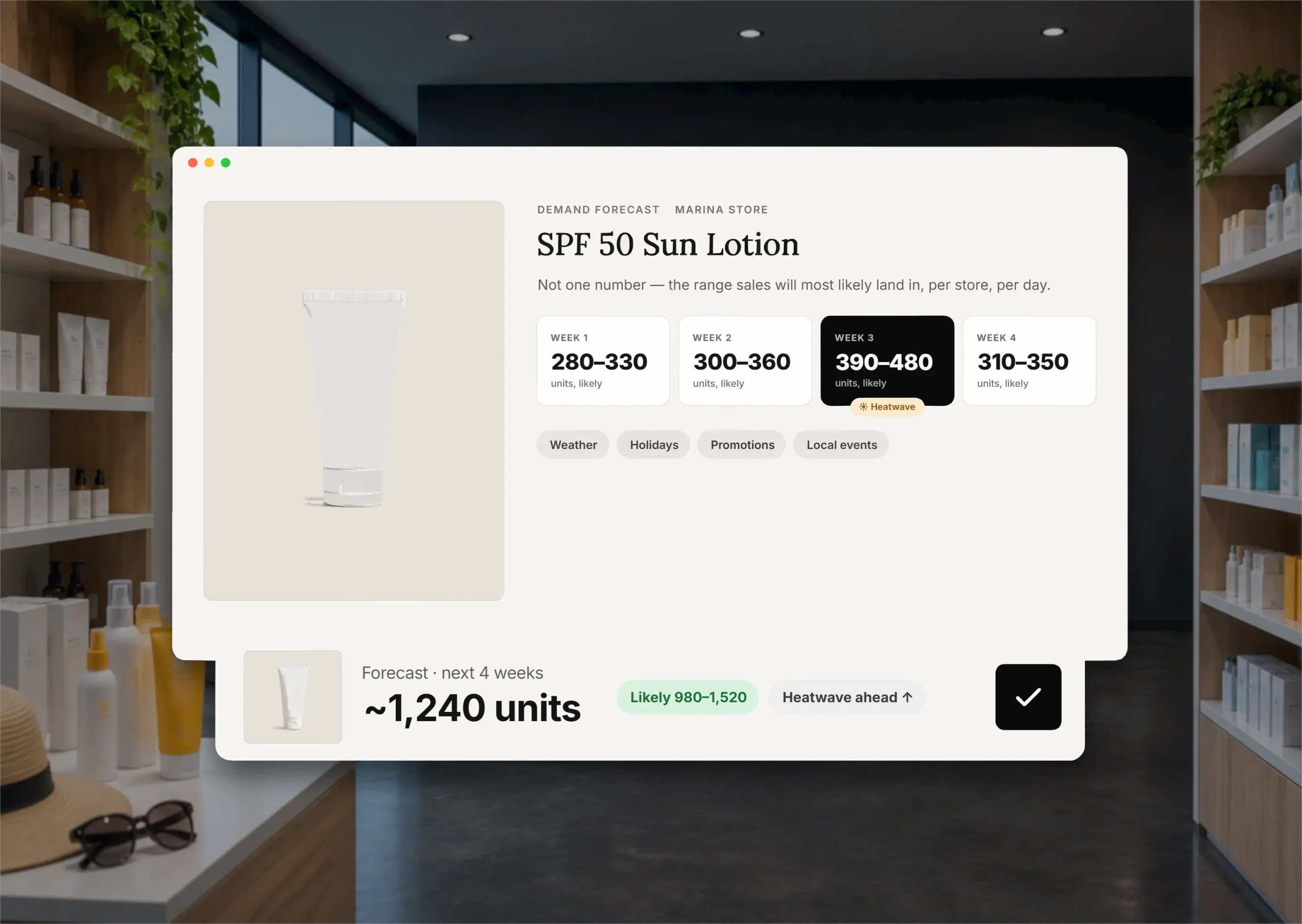
Sales rise and fall for different reasons. Demand Forecasting separates those reasons, so each one is forecast on its own terms.
Demand differs between stores, and between online and in-store. Forecasts are built at that level, then rolled up for planning.
Zero-shot forecasting estimates demand for products that have never sold, by learning from similar items in your catalog.
Planned promotions, launches, and key dates shift demand. Building them into the forecast helps stock arrive before demand peaks.
Forecasts are measured against actual sales and shared with the teams that act on them.
 Sales, events and weather
Growdhi's Demand Forecasting

Corrects sales history hit by empty shelves or bad stock records, so the forecast learns what customers really wanted.

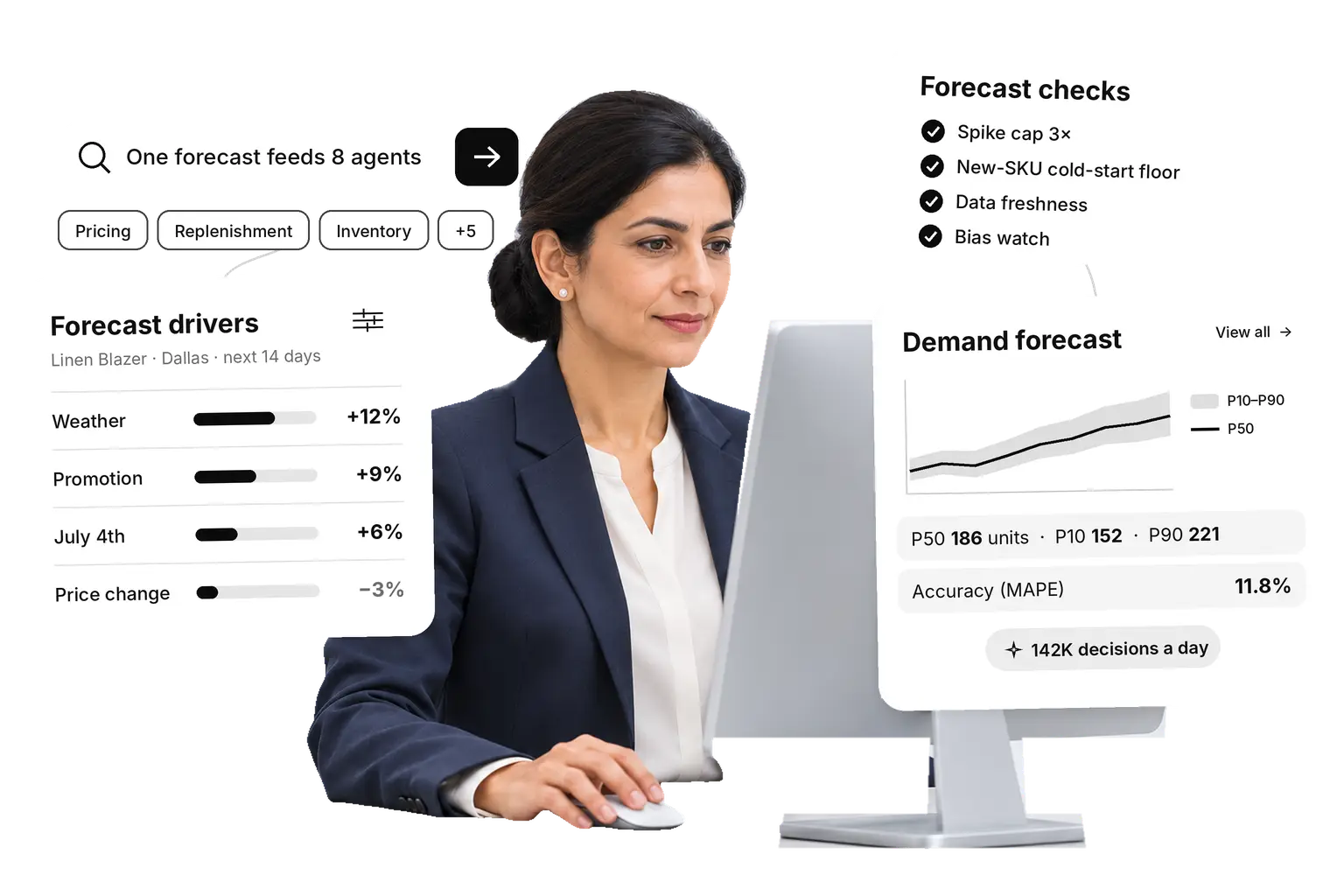
Predicts the likely range of sales for every product, store and day, allowing for holidays, promotions, price changes and weather.

Marks forecasts it is unsure of, flags sudden shifts, and shows whether planner changes made the forecast better or worse.
Prices from Dynamic Pricing • Promotion results from Promotions • Stock and stockouts from Inventory Optimization Weather, store traffic and marketing calendars from outside sources
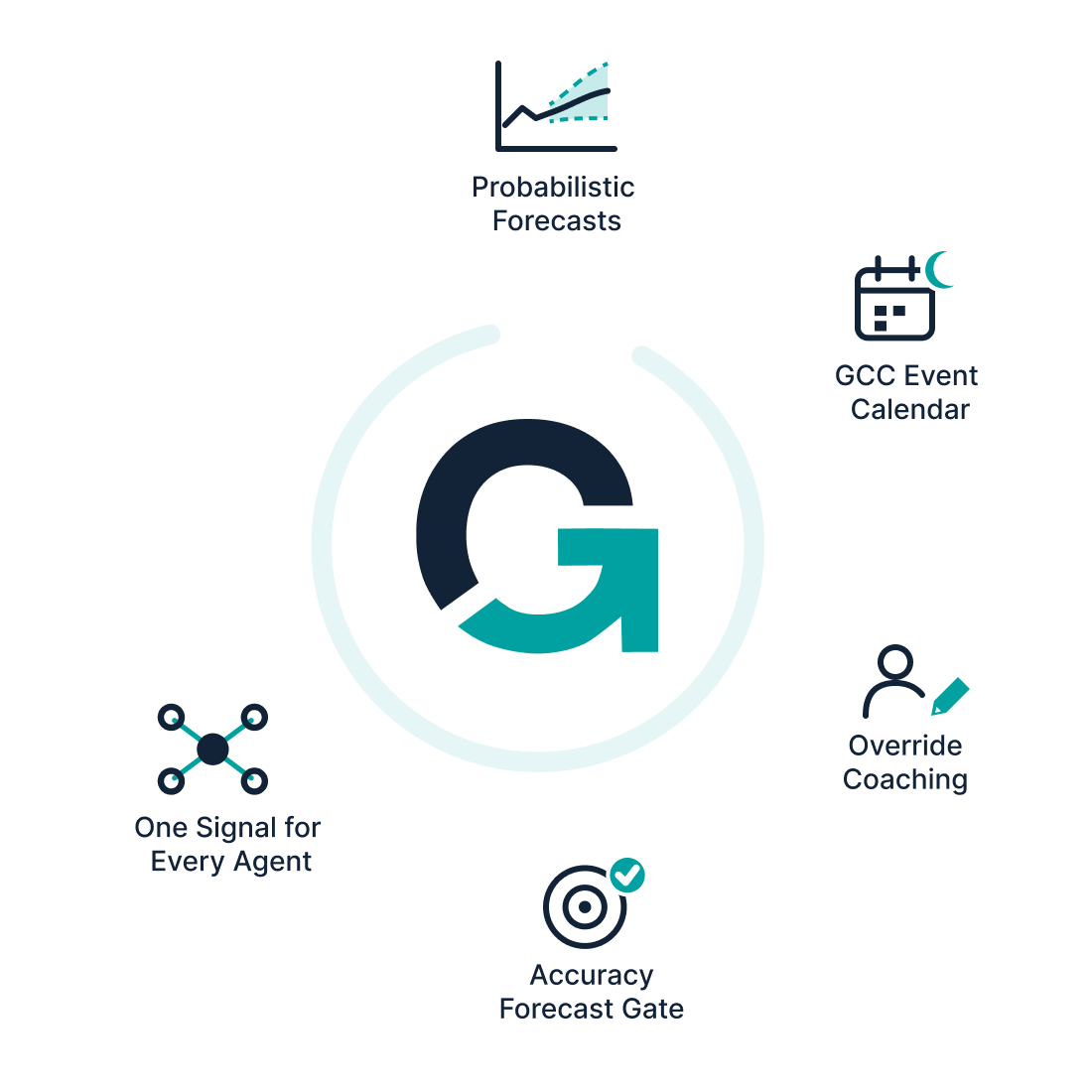
Nine agents plan from the same forecast, and pause when it is not trustworthy.

Stock targets and orders sized to the forecast range

When to hold a price, run a promotion or start clearing

Budgets and product ranges built on expected demand


Built for businesses whose margin depends on reading demand early, Demand Forecasting adapts to your products, your stores, and your seasons.

Fashion & Apparel
Short seasons and constant new styles leave little history to work with. Forecasts built from similar styles and store-level demand help size first buys and allocations.

Grocery & Hypermarket
Grocery demand moves with weekdays, promotions, and local habits. Daily store-level forecasts help set orders that keep fast movers available without over-ordering perishables.
Specialty Store
Many specialty products sell only a few units at a time, and sales vary a lot from store to store. Forecasts for each store show where an item is likely to sell and how much to keep.
A space to explore ideas, spark perspectives, and turn curiosity into clarity. Where thinking evolves into meaningful insights that guide smarter decisions.

 Blog
Every fashion retailer commits money to product months before it knows what customers will buy. This guide explains how fashion margin is made and lost, how business models place that bet, and how leaders use AI in 2026.
Read Article Blog
Grocery is the one retail segment where a bad decision can expire before anyone reviews it. Margins run at a few cents on the dollar, fresh stock lasts days, and shoppers return every week to test whether the store still delivers value. Most enterprise grocers already own capable systems for forecasting, pricing, ecommerce and loyalty. […]
Read ArticleFind quick answers to common questions about our solutions, features, and capabilities. Everything you need to understand how it works and how it helps your business.
AI demand forecasting estimates how much of each product shoppers are likely to buy, by store and channel. It learns from sales history, seasons, promotions, and events, and it updates as new sales arrive.
Spreadsheet forecasts usually copy last year’s sales and rely on manual adjustments. AI separates everyday demand from seasonal swings and promotion lift, forecasts at store level, and refreshes daily.
Yes. Zero-shot forecasting estimates demand for new products by learning from similar items you’ve sold, then updates the forecast as real sales come in.
Every forecast is compared with actual sales. Your team can see accuracy by product, category, and store, and review the forecasts that need attention.
It is part of Plan IQ. Its forecast feeds Supply IQ for replenishment and inventory decisions and Price IQ for pricing and markdowns, so every team plans from the same view of demand.