Start a Conversation

Stock where it needs to be, before stockouts happen.

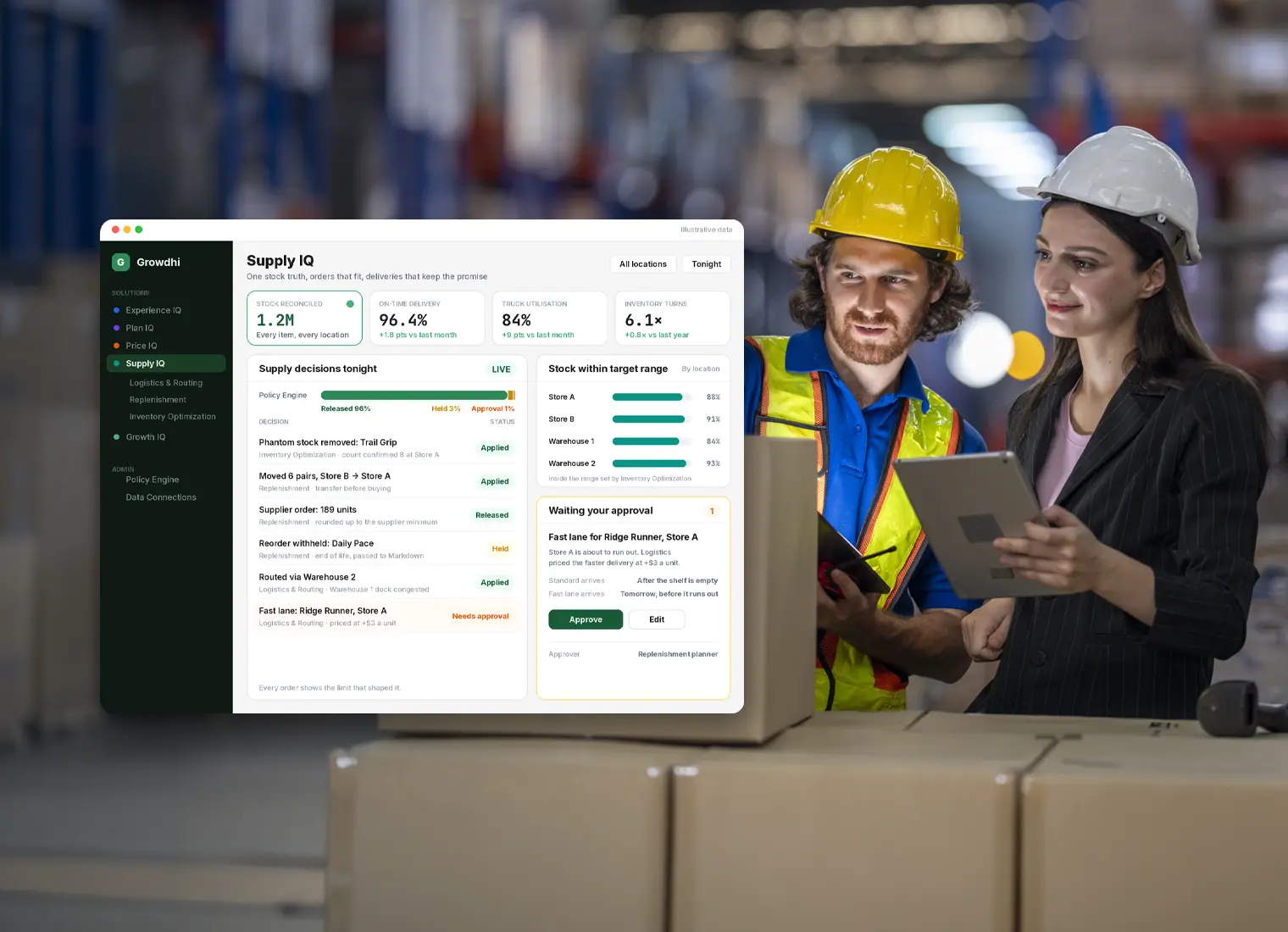
Supply IQ runs reorder timing, true inventory position, and delivery routing as one system, using the same forecast.

Supply IQ

What does this solve?

Stockouts and firefighting usually trace back to the same root cause: decisions made too late, on stale numbers. Fragmented supply chains mean stock sits in the wrong place while the right customers are left empty-handed. Supply IQ optimizes inventory allocation, connects replenishment, and provides logistics insights that translate into better business.

If you are looking for any of the benefits below, you should see the video.

  • Stock is in the right place, at the right time.
  • Automated replenishment responds to demand signals.
  • Fulfillment is faster without inflating safety stock.
  • Customer retention and experience improve.

What's inside Supply IQ - Agents

Inventory is working capital that drives growth. Supply IQ helps you stay ahead with smarter, real-time supply decisions through our autonomous solutions like Replenishment, Inventory Optimization, and Logistics & Routing.

Inventory Optimization

Inventory Optimization

Inventory Optimization

Balance inventory levels to reduce costs and stockouts.

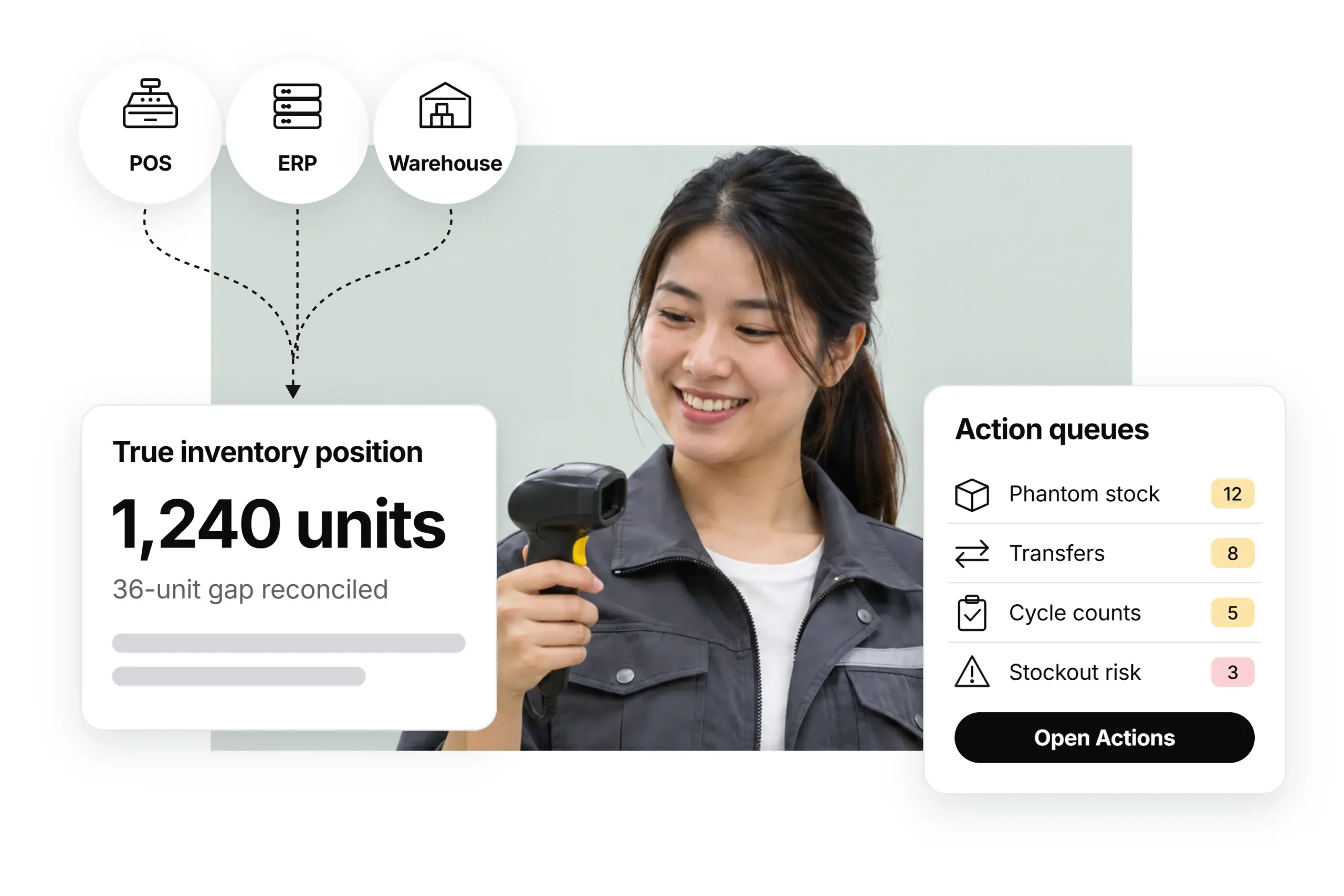
  • It reconciles POS, ERP, and warehouse systems into one true inventory position, closing the gap between what your systems say you have and what's actually on the shelf.
  • It separates avoidable excess from genuinely forced excess, so teams fix what's fixable instead of writing everything off.
  • Nine operational queues, such as phantom stock, transfers, cycle counts, stockout risk, and capacity conflicts, are each routed for approval, not buried in a report.
KPI: Inventory Optimization: inventory turns, stockout rate, inventory accuracy
Explore Inventory Optimization

Replenishment

Replenishment

Automate replenishment to always maintain optimal stock availability.

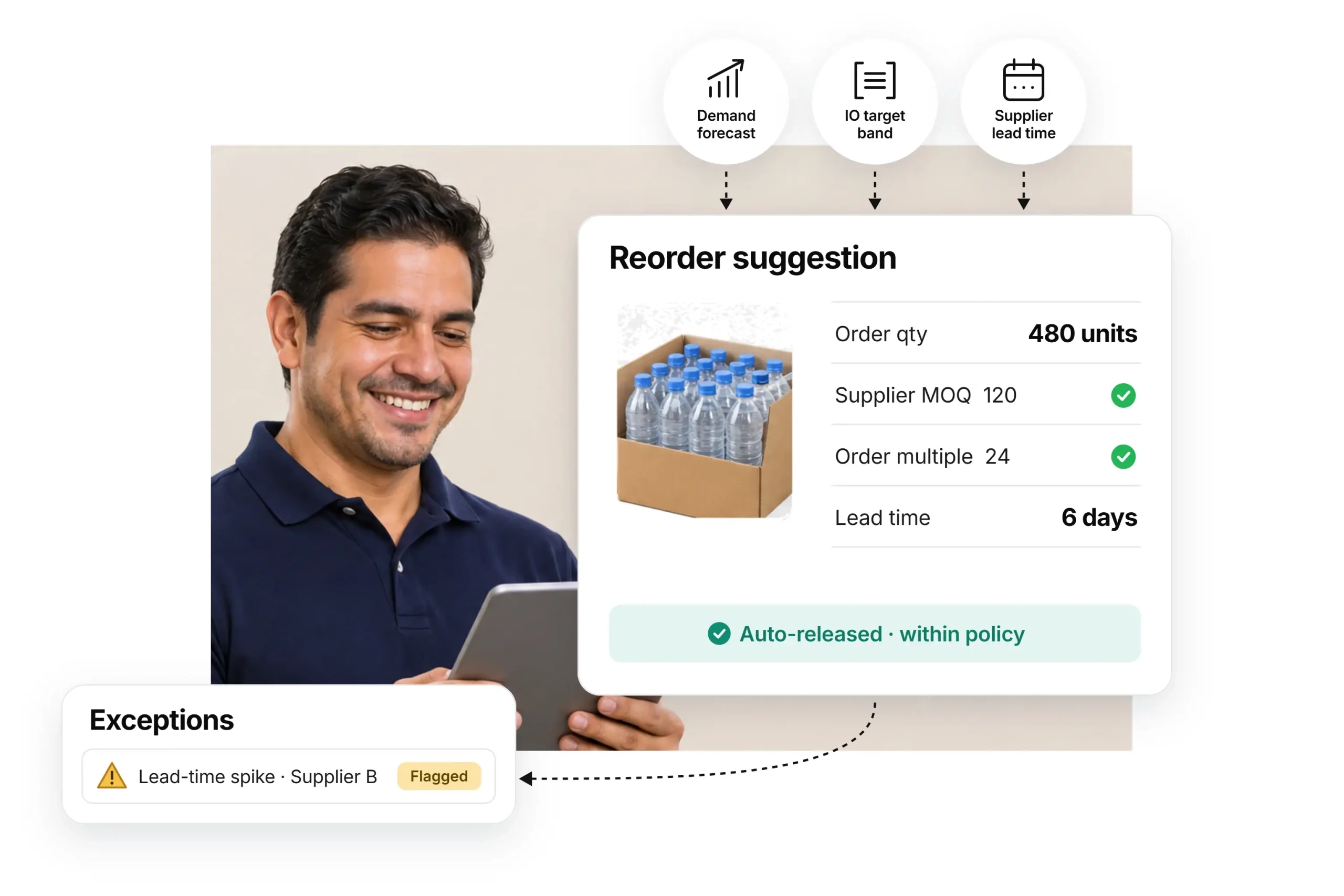
  • It calculates reorder timing and quantity from two forecasts at once: demand and supplier lead time, not just one.
  • It respects your actual supplier terms, such as MOQs, order multiples, and lead times, not generic reorder math.
  • It flags exceptions instead of drowning planners in every order: phase-skip requests, lead-time spikes, and capacity conflicts surface automatically.
  • Autonomy is earned in stages: it is shadowed and validated before it runs unsupervised, with instant rollback.
KPI: Replenishment: in-stock rate, fill rate, safety stock held
Explore Replenishment
Replenishment
Logistics & Routing

Logistics & Routing

Logistics & Routing

Optimize routes and logistics for faster, cost-efficient delivery.

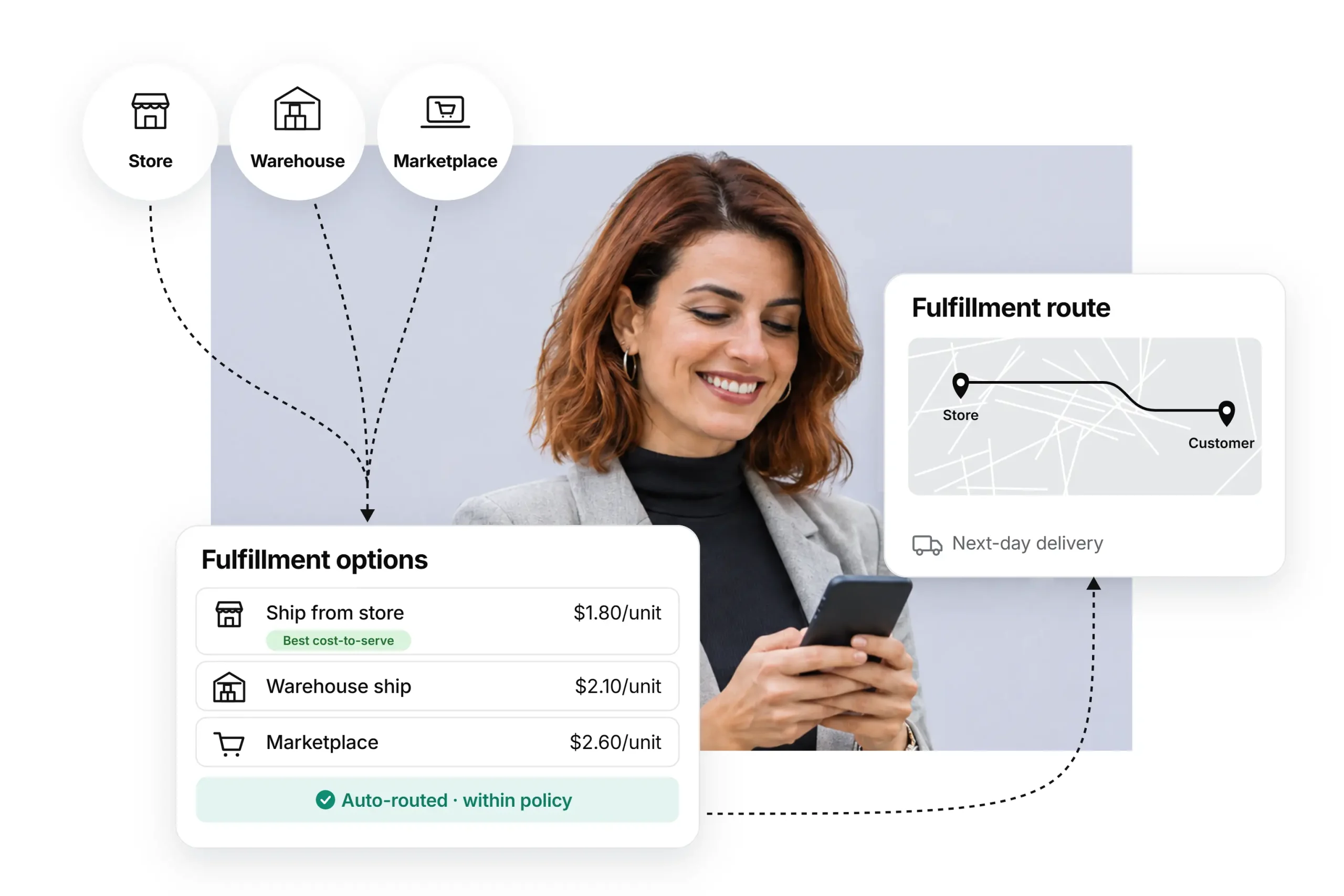
  • It decides which inventory ships from where, by which path, at the lowest total cost, across store, warehouse, and marketplace fulfillment at once.
  • It works with your existing carrier and TMS systems; it sits above what you already run and doesn't replace it.
  • It is built for diverse market realities, such as cross-border customs, hot-weather dispatch windows, and peak religious travel periods.
KPI: Logistics & Routing: on-time in-full (OTIF) rate, cost per order shipped, express shipping spend
Explore Logistics & Routing

See How Supply IQ Fits Your Business

See how Supply IQ fits your supply chain workflows, goals, and business needs. Understand how it works with your existing systems to drive smarter decisions.

How it Works

Ops Manager Reviews Ops Manager Reviews

Growdhi's Supply IQ

Inventory Optimisation

Inventory Optimisation

Monitors and optimises stock across DCs and every store.

Stock band • EOL flag
Replenishment

Replenishment

Recommends and orders the right quantity at the right time.(Icon labels: Supp. → DC, DC → Store)

Order released
Logistics & Routing

Logistics & Routing

Picks the best route and carrier for every order and transfer.

Demand forecast • OTB budget from Plan IQ

Signals Passed to other IQs

Supply intelligence powers other IQs across the platform.

Experience IQ

Experience IQ

Stock availability

Price IQ

Price IQ

Overstock · lifecycle · landed cost

Plan IQ

Plan IQ

OTB consumption · lead times · plan variance

Business Outcomes

Business Outcomes

+15-25%
+15-25% Inventory turns
>95%
>95% On-time in-full

Life with / without Growdhi

Demand & Replenishment
Inventory Allocation
Fulfillment & Routing
Automation & Control
Planning & Visibility

Without

Reorders are placed on last week's sales, not next week's demand.
One store runs out while another sits on surplus of the same item.
Every shipment is routed by hand, one decision at a time.
Automation arrives all at once, so teams quietly work around it.
Warehouse, store, and logistics teams each plan from their own numbers.

Where Strategy Meets Execution

Built for industries where stock availability directly impacts sales, working capital, and customer retention. Supply IQ adapts to your business model and supply chain realities.

Two people shopping at a clothing rack

Fashion & Apparel

Timing seasonal reorders

Seasonal drops depend equally on supplier lead time and demand timing, and misjudging either leaves you with dead stock or a sold-out trending item.

Supply IQ times every reorder against both signals together, so each drop lands while demand is still at its peak.

Two people shopping at a clothing rack

Grocery & Hypermarket

Keeping fast movers on the shelf

Grocery combines the highest SKU velocity with the thinnest margin for error, as stock flows from multiple distribution centers to every store at scale.

Supply IQ reconciles inventory across every location in near real time, so fast-moving lines are replenished before shelves run empty.
Two people shopping at a clothing rack

Specialty Store

Protecting working capital

A smaller footprint means every unit of working capital carries more weight, so excess stock hurts faster.

Supply IQ separates avoidable excess from forced excess, so your team fixes what it can control and buys with more confidence.

FAQs

Supply IQ is Growdhi’s AI supply chain suite for retailers. It splits inventory into three decisions, each owned by one agent. Inventory Optimization decides where stock should be, Replenishment decides what new stock to order, and Logistics & Routing decides how it moves. All three read the same stock position, lane data and delivery calendar, so each stock gap is closed by exactly one move: never a transfer and an order for the same gap.

AI inventory optimization works out the right stock level for every product at every location and moves surplus to where it’s needed. Supply IQ first reconciles stock data from POS, ERP and warehouse systems into one trusted position. It flags phantom inventory, meaning stock the system shows but the shelf doesn’t have. It then sets a minimum, optimal and maximum stock target for each product at each location from probabilistic demand forecasts, and recommends transfers from overstocked locations to understocked ones.

Supply IQ creates store orders daily and supplier purchase orders weekly. Before ordering, it checks each product in a fixed sequence. It holds the order if the stock data is unreliable, if the item is being cleared, if the season is ending, or if a transfer can close the gap. It then rounds quantities to pack sizes and supplier minimum order quantities, and respects supplier capacity and the remaining open-to-buy budget. Every adjustment is recorded with its reason.

Transferring existing stock is usually better because it uses capital already invested, but only if it arrives in time. Supply IQ checks for a transfer first and places a new order when the transfer route would miss the date the stock is needed. When a transfer covers only part of the gap, the order is reduced to the remainder and linked to the transfer. That prevents paying twice to fill one gap.

Supply IQ routes every shipment through four decisions: which location it ships from, which type of flow it is, whether it can share a truck with other loads, and which carrier, method and route to use. It handles store orders, supplier deliveries, stock transfers, marketplace orders and returns. Products with special handling needs, such as cold-chain items, are kept in separate loads. Express shipping is approved only when its cost is below the cost of the stockout it prevents.

Supply IQ needs stock on hand from POS, ERP and warehouse systems, and sales history covering at least one full seasonal cycle. It also needs supplier lead times, minimum order quantities and pack sizes, carrier rates and transit times, and each store’s receiving days. Rollout starts in shadow mode, where every decision is made and recorded but not executed. Automation then expands in stages from 5% to 100% as results are proven against the retailer’s current decisions.